Mental Toughness Isn't a Mindset. It's a Practice With a Brutal Entry Fee

At the peak of my leadership career I was responsible for a 250-person customer-facing team. That number sounds like an achievement. Behind it was the daily weight of holding a standard 250 people were watching you keep or abandon.
Every hire you got wrong. Every promotion that did not land. Every quarter where the number was right and the culture underneath it was starting to crack. Every conversation where someone needed you to be steady and you had nothing left.
That is where mental toughness gets built. Not in the highlight reel. In the moments where you are the only thing standing between the standard and the slide, and you are exhausted.
Mental toughness is not what you do when you are inspired. It is what you do when you have run out of reasons.

What the industry gets wrong
The resilience industry sells bounce-back. You fall, you get up, you keep going. True as far as it goes. It misses the more important skill.
The real work is not bouncing back faster. It is building something underneath you so the fall is shorter. That something is practice, not mindset, not attitude, not positive self-talk. A daily, unglamorous practice of doing the hard thing when the easy thing is available.
I watched this across hundreds of sales professionals over three decades. The ones who lasted were not the most talented or the most naturally confident. They had a set of non-negotiable daily behaviours that held them up when motivation was gone.
Mindset shifts. Practice compounds.

Four places it actually lives
Mental toughness is not one thing. It lives in four places, and you need all four or the others eventually fail.
Control. Not of outcomes. Of inputs. Preparation, effort, response to rejection. Release everything else without drama and return to what you can move.
Commitment. Not to a goal. To an identity. Goals can be missed. Identities are harder to walk away from. The rep who has decided they are a professional does not need to motivate themselves to prepare.
Challenge. Read difficulty as information rather than verdict. Every lost deal contains a data point. The mentally tough professional mines it. The fragile one avoids it.

Confidence. Not arrogance. The quiet, earned belief that you have been in hard situations before and found a way through. Affirmations do not manufacture it. A history of doing hard things does.
The entry fee
Here is what nobody tells you: it requires you to stay in the situation long enough for the lesson to land. That is the entry fee.
Most people exit the discomfort before the compound interest kicks in. They change jobs, lower the standard, renegotiate the target. None of those things are wrong in every circumstance. Sometimes they are the moment that would have built the thing they are still looking for.
The 250 people I led did not make me mentally tough. The years of refusing to lower the standard when it would have been easier did. The conversations I did not want to have. The decisions I could not delegate. The quarters I had to stand in front of the team and tell the truth.

Every one of those moments cost something. Every one of them built something. That math does not lie.
One non-negotiable
If you feel the gap between where you are and the proof, good. That gap is not a verdict. It is distance. Distance closes with practice, not inspiration.
Start with one daily behaviour you hold regardless of circumstance. The call you make. The review you run. The preparation you do before every client conversation. Hold it on the days it feels pointless. Hold it especially on those days.
That is not a productivity hack. That is the beginning of mental toughness. The beginning is the only place it has ever started.
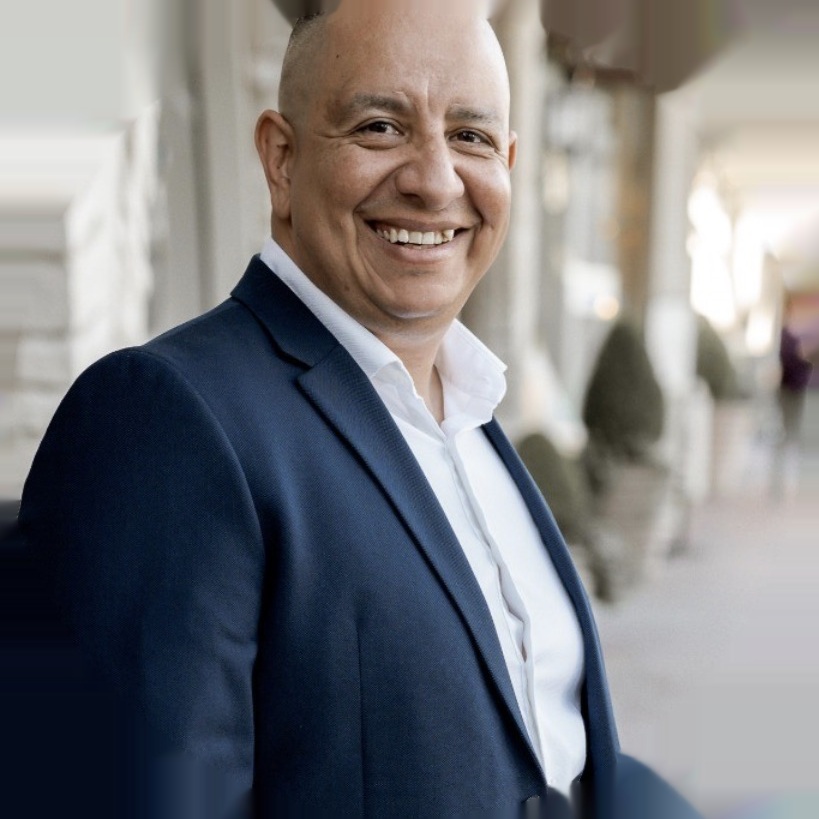
George Leith is the founder of Evolved Pros and author of EVOLVED, available for pre-order at evolvedpros.com/book.

The Brief
One read every weekday from Evolved Pros Media.
No spam. Unsubscribe in one click.
Community
Start free. VIP is there when you want more.
Join the Community with no card. VIP is $99 when you want Fit and Academy depth. Media stays open.