
Technology & Personal Evolution with Dennis Yu
Dennis YuApril 30, 2026· NAB Show, Las Vegas
Dennis Yu joins George Leith for the Evolved Pros debut: evolving with AI, taking 'the network view,' hiring by proof, agents as multipliers, and why your value isn't your skill set.
Chapters
- 0:00The debut. why Dennis Yu is guest #1
- 2:00Math Olympiad to Yahoo: the data-access edge
- 6:00Taking 'the network view' to stay ahead
- 8:00Why Google sat on AI
- 10:00What AI won't touch. and where the audience buys
- 14:00"That's not how we've always done it"
- 15:30Sound mind, sound body: health as the foundation
- 17:30Agents as multipliers; A-players & skill files
- 20:00The five ways to say no & the 'speed bump' hire test
- 24:00The CNN / Cambridge Analytica story
- 29:00Becoming the media: knowledge graph & reward loop
- 33:00Don't quit early: how audience compounds
- 44:00The next 36 months: UBI, abundance, and risk
- 48:00When money doesn't matter: you're not your skill
Highlights
“My advantage my entire career has always been: do I have more and better data access?”
Dennis Yu
“If you understand what the market maker, the network, is looking to do, that gives you a better view.”
Dennis Yu
“Google had all that AI stuff years ago. They intentionally sat on it because it affected their ability to monetize.”
Dennis Yu
“The things AI's not gonna touch is physical AI right now — roofers and plumbers.”
Dennis Yu
“The line that makes the hair on the back of my neck stand up is, 'That's not the way we've always done it.'”
George Leith
“I can use agents as a multiplier — get 10 times more out of an A player.”
Dennis Yu
“Your value should come from you as a person, your relationships, not the fact that you have a particular skill.”
Dennis Yu
“Every day is Christmas to me.”
Dennis Yu
Transcript
George Leith: Conversations with the operators, founders, and leaders doing the slow, hard, beautiful work of becoming who you always knew you could be. I'm George Leith. Let's get to work Very happy to have Dennis Yu on, uh, our inaugural edition of the Evolve Pros podcast. And for those of you joining the show for the first time, you remember we had the Conquer Local podcast. I'm sure there's lots of folks that watched that show that are now watching the new show. No one was a guest more on Conquer Local than Dennis Yu, so I was like, "Who are we gonna have for the first guest? Might as well get my friend, Dennis Yu." Happened to be here in beautiful Las Vegas at the, uh, NAB. And, uh, Dennis, thanks for giving us the time.
Dennis Yu: Amazing, George. Every time, always amazing.
George Leith: It's looking forward, I'm really looking forward to having this conversation and discussing evolution with you, because we've had the privilege of knowing each other for Well, I don't know if you call it a privilege, but I definitely call it a privilege of knowing you for the last 14 years, and I've watched your evolution over those 14 years, which has been quite remarkable from that evening that we saw each other and met each other in New Orleans at the PubCon- I remember Conference. Um, and we've been able to do a lot of work together over the years. And, you know, we're sitting in this very transitional time for everyone, maybe even a little uncomfortable for lots of folks, where they're having to learn AI, and they're having to adopt to new technology. W- we've had that the entire time that you and I have known each other, but not at the pace that we're dealing with right now. Right. So let's, before we get into that, I'd just love to get a bit of background, uh, for the audience that's maybe joining us for the first time on the Evolve Pros podcast. Uh, just give us the, the TLDR on the Dennis Yu career up to this point. It's really hard to get it down to a few bullet points, but just to give people a bit of an overview of you, and, and where you've come from, and, and who's your mom, and that kind of thing.
Dennis Yu: Yeah. I'm a Chinese math Olympiad. I was number five in the nation in math counts. I went to math competitions and flew around. Found out I was good at it, and that naturally translated into search engine optimization, working on really big data sets. Because back in the mid-'90s, where I built a.com for American Airlines, it's huge, huge data sets. You have, like, the Sabre system, the CRM system, the website, all the fares and quotes, all the information about, like, Advantage members, right? And being able to s- to connect all these different systems was just a hairy integration kind of nightmare. And I learned from there how to do it for a search engine. I was one of the first people at Yahoo. A lot of the folks who, you know, are younger adults, they don't, they don't remember that. They're like, "Google." I'm like, no, a lot of our people that, that started the analytics, and we had the world's largest website, and the most popular website on the planet. We had everything, news, shopping, travel, sports, finance, small biz- Google then built a portal that was like that. And in fact, the whole idea of PPC, they actually took from us. Right. A lot of people don't know that. And so sitting on top of the world's largest database on the most populous homepage on the internet gave me access to all kinds of things. So not only were we doing analytics for all the different properties, kind of like an agency, but we also had all the PPC. So I would run, no one can put me in jail for this now, but I would run ads for Yahoo! Personals, which is our dating site, but then I could look at all the ads that Match.com was running, right? So no one could beat me in PPC 'cause I had everyone's ads, but I also had all the analytics. So I don't think anyone else in the world had that, the insight of being on both sides. 'Cause I could see everyone's advertiser account, and I had all the analytics on 250 million users. And we built these up into clusters where the ad sales team would sell them out at class one, two, and three inventory. But then we had programmatic that sat on top of that, and we built clusters for Ford and Verizon and Nike and other folks, 'cause they wanted, you know, people who were in the market for a new truck, and they just had a family, and they lived in the South, and they were Americans, and they, you know believed in, you know, they had l- had guns. Whatever. Like, we would... It was just so much fun because my advantage my entire career has always been- Do I have more and better data access? And now, with all the AI, the teams that I had built, I hired these kids out of Stanford or, you know, Berkeley or whatnot, I have AI agents that are doing the same thing except we're just integrating different systems. But we're... The, the whole idea of understanding your audience and having pixels and cookies and all this way of tracking, you know, audiences together across many channels, and being able to then build these clusters of users, which some people call like a funnel or whatever, you step these things and d- you know, there's a pathway, and then being able to distribute that media and be able to track the media and track the phone calls and all that. That none of that has really changed. It's just now there's TikTok, now there's different other intermediaries. Like, back when I did this, like, we didn't know what an SSP or DSP or any of these other acronyms were.

George Leith: Right.
Dennis Yu: But the, the pace we feel with this acceleration, from my view, has always been there's more technical things in the way, so it's more complicated. But ironically, it's actually simpler because there's less that we have to do because we're managing these platforms, these agents. We give these agents names now, which is crazy.
George Leith: So as we look at this evolution, it's, it's a really interesting backstory. I've got a couple other Dennis stories that we'll tell in a few minutes that are riveting. But as we look at this in, in the theme of evolution, that evol- even though some of the base components are the same, there's been a massive learning curve, I'm sure, to that evolution. Yeah. And, you know, it's easy to see that y- you're incredibly intelligent and you have that math background. But what are some of the things that you deploy on a day-to-day basis to stay on top of the pace of change? Because when I'm watching your videos on YouTube and you give very freely of your learnings online I'm like, "How is Dennis out on the front of that?" Yeah. So any tips for us as an audience as to how we could adopt some of your, uh, methodologies to stay on the cutting edge?
Dennis Yu: My methodology's really simple. I know the people that are making the change. And so we have dinner, we hang out. But think of it this way. Almost everyone comes in as a advertiser or as a supplier, right? Either you provide the traffic and you're selling it or you're buying the traffic.
George Leith: Yes.
Dennis Yu: It's supply and demand, you know, two-sided network. But here's the thing that people don't understand. What if you take the view of the network? What if you take Google's point of view? What if you take ChatGPT's point of view? The, the market maker. And I've always taken the view of the market because that's who I was. I ran the search. I was deciding who would get what traffic and what the price was. Right. The market clearing price would be, you know, five cents a click or $5 a call or whatever it was. So if you understand what the market maker, the network is looking to do- that gives you a better view instead of like, "Oh, here's these tricks on how to, like, fool Google into ranking," or, "Here's, you know, different ways we can pool audiences and mark it up at a higher price." Like, yeah, but then you're taking on- only the supply or the demand side. But if you take the net- I, I never hear people talk about the network side. Mm-hmm. And so I've always approached from that point, and thus everything we see coming, like ChatGPT just launched PPC.
George Leith: Mm-hmm. Right?

Dennis Yu: You pay, like, three bucks a click, five bucks a click. That's higher load depending on the inventory and the measurability of that. But we knew that had to happen if we take the network view.
George Leith: Okay.
Dennis Yu: We knew that Gemini and Google's whole, like, AI overview was gonna be incorporated in, their ad inventory would be incorporated into that. Right. The more they showed AI results, the more inventory there was, and they could control that. We knew that five years ago, 'cause I was with the head of search quality at Google. We were at a conference together. I don't wanna say his name 'cause I've gotten him in trouble by, he told me some things and I sh- I shouldn't have told people on a podcast.
George Leith: Right.
Dennis Yu: But I'll just say that- Google had all that AI ChatGPT Claude stuff years ago. They intentionally sat on it because it affected their ability to monetize.
George Leith: Right.
Dennis Yu: Because when they tried to serve ads inside this ChatGPT consolidated answer, they found that people wouldn't click on the ads. So it wasn't like they didn't know. Remember, like, people were like, "Oh, well Google's gonna get destroyed by Perplexity or Claude or ChatGPT." And we knew that wasn't the case. Right. We knew that they had already tested that out. So the way I stay ahead is I hang around other engineers that are in char- Like, it's crazy, 'cause you go to Silicon Valley or whatnot, and, you know, I'll just- we'll, we'll be at, like, a fancy sushi place. I'm like, "Oh, there's my buddy Brian Acton." Like, him and Jan Koum, they founded WhatsApp. We were Yahoo employees. Mm-hmm. They happened to make 14 billion, and I didn't. But, you know, I'm like, "Hey, what's going on?" Like, "Oh, Dennis, man, you, you've lost weight," or you know. Like, it, it's so neat seeing that. That's how I stay in touch. And you would think, like, it'd be this, like, technological wizardry. You know, I'm in the code and I have this, like, deep matrix insight. I'm Keanu Reeves, and, like, the green line's all of a sudden turning into the woman in the red dress. No, it's actually as simple as hanging out with George Leaf, right? I mean, just, like, being around you, being around Liana Ling. We were in Toronto last week. Like, I'm, I'm just absorbing. That's all I'm doing.
George Leith: So a student of people, and you built a hell of a network. That's the other piece. I, I had some- an epiphany that came to me in the last couple of years as I've been transitioning from roles, and I, I was like, the network is the superpower.
Dennis Yu: Yeah.
George Leith: It's the, it's the dinners, it's the conferences. Yeah. It's the being there. Um, I had a... One of my sales trainers, he doesn't even know he's a sal- he was my sales trainer, but it was early in the days when I was learning how to sell, and he had this line: "Moving salesperson attracts business." Yeah. And I never forgot that. No. Uh, we're here at the, at the NAB, which has train- has changed dramatically in the last 13 years. Yeah. Interesting story. There never used to be other conferences during the week of the NAB because the National Association of Broadcasters global show took over the entire- city of Las Vegas. Now, Vegas has gotten bigger and there's more hotels, but there's literally five conferences going on this week, and you never used to see that. Yeah. Um, as that industry continues to consolidate. Yeah. Um, and you know, yesterday was, was day two. I was in a few meetings. Again, I'm not gonna talk about who I was in meetings with. Yeah. But, you know, tho- that industry, the media industry, is going through an enormous amount of change, and y- there was like what was left to change? But there's still change happening, and there's a downsizing that's happening. Yeah. So I'm gonna use media as the example, 'cause it's an industry that both you and I have been close to. But that, do you see that downsizing happening everywhere as AI continues to move forward? Yeah. Or will there be industries that will grow from, um, the evolution of AI?
Dennis Yu: The things that AI's not gonna touch is physical AI right now, so roofers and plumbers and, and that kind of thing, which is why I love home services so much. But anything to do where there's some technical component, programming, digital marketing, building websites, broadcast TV even, like- Carson Teegarden and I, we were at the Streaming Summit yesterday, and it's a bunch of old guys, and they were talking about, "Back in the day when we had broadcast TV." Like, and I'm thinking, "Uh, you don't understand streaming at all." It was the most boring kind of thing I'd ever seen. Mm-hmm. We had to walk out it was so bad. I'm like, "You guys, do you not understand? You can stream on YouTube. You have live streamers. You have Twitch. You have all..." And they're still thinking of the world of broadcast TV. I think it is simply this: where is the audience that's buying? Right? If they're on Facebook, then that's where you need to be. Right. But if you're a young adult and you're making stuff for young adults, then fine, be on, you know, TikTok and Instagram and whatnot. But if you're a young adult serving older people, executives like me, then they're not on TikTok, Carson. They're somewhere else, right? So wherever the audience... I've literally watched this progression, the slow motion car wreck. Where is the audience? So you remember back in the day, I was like the guy for Facebook ads. We taught summits for Facebook training for Facebook, which they liked that because, you know, we got them to sell. I wasn't on their ad sales team, but I felt like I was. I knew their number one, per- first person ever to join their ad sales team. And we had a bestselling book on Facebook ads. We sold 800,000 copies of that and that Google ads book. And then TikTok came in and said, "Hey, you know, we're gonna copy the ad system exactly so anyone who's running Facebook ads could run TikTok ads.
George Leith: Right.
Dennis Yu: But advertisers didn't know how to make video and didn't understand that, that other stuff. They thought it was this technical thing like setting up PPC, and you can hide behind this thing with ad groups and bidding strategies and single keyword ad groups and all that kind of stuff. And they were smart, and they said, "You have an audience of people that trust you for how to do Facebook ads," right? We spent a billion dollars on the ads for a bunch of big companies. So they said, "We're copying the way you set up Facebook ads, so you literally can just copy the same ads over into TikTok. And because that's where the traffic is growing, that's where we can literally move everything over." Right. So TikTok paid us a lot of money to write a book on that, and we basically took the same concepts and copied it over. And some people were able to adapt to that change because they understood at the core first principles that Facebook was about telling stories on video, especially vertical cell phone video. Like this, we could clip up into different pieces.
George Leith: Right. Which we will do, by the way.
Dennis Yu: And that's those little moments, like in a podcast, th- those, a 30-second clip or whatnot, that can live on Instagram and TikTok and YouTube Shorts, which is crushing it, right? And other sorts of media, five or six. And then those can also be turned into ads on top of that. Right. Right? So you and I know that because from a first principle standpoint, we understand that there are relationships that have trust. This is not AI generated. This is you and I actually going out to eat meat, for example, right? And you, you paid for the, the amazing, uh, Korean barbecue thing we had last week in Toronto. There's a real, there's evidence of that, right? And brands who have evidence that they have taken care of their customers- When there is a TikTok or when YouTube makes a change or like they're, they actually go, they accelerate ahead of everyone else instead of like being old people that are constantly reacting and denying that there's change and trying to hold onto the way things were done before.
George Leith: Well, and it, it's interesting, and you're bringing up a, a topic that will be discussed on this show ad nauseam, and that is that the line that makes the hair on the back of my neck stand up, which is, "That's not the way we've always done it." And then when we look at the data, your revenue is down, your profit is down. Uh, the people that are involved in the organization are not having as much fun as they used to have because defending a situation that's declining is not as much fun as building something. What, what is... You know, you've had success in showing people the light and that they need to move in another direction. What are some of the, the, uh, methodologies again that you've done to do that? Because I, I have, I've failed numerous times in taking some very veteran individuals to say, "Here's where the puck is headed.
Dennis Yu: Mm-hmm.
George Leith: Um, "It's not that hard to do. I can do it." Wh- why do you find that some people adopt and others don't?
Dennis Yu: I think change management starts top-down.
George Leith: Okay.
Dennis Yu: So if you try to convince a manager or a VP or whatnot, you're gonna play this political war, and you don't have the power to do it, even if what you're saying is logically correct. So what you do is the CEO, you go to lunch with the CEO, or the CEO believes what you're doing, and then the CEO issues the mandate. And in any company, I've learned that no amount of logic, no amount of persuasion, no amount of reports can overcome when the CEO
George Leith: says it. The, the top-down. Yeah. So then what about when we're making a change in our personal lives?
Dennis Yu: Mm-hmm.
George Leith: Who's, who's the CEO in our personal lives that we've gotta reach through? I wanna do a segue into part of the evolution that is sitting in front of this audience because if you put Dennis Yu and George Leith 14 years ago- on film, you can actually probably find some film, doesn't quite look what you're seeing here on the screen today. About
Dennis Yu: half as big as we were.
George Leith: And, and, and part of that is I find that when you're, you're in better physical shape, you're also in better mental shape. Yeah. You're taking care of this machine that runs. Yeah. And when I've been able to move an individual into a new direction they kinda have their house in order as well before they make the move. I wanna draw a correlation to that. If the individual's feeling good about themselves and how they're going, then they're seem to be more open to making an evolutionary change in business or personal or... Let's talk about that a little bit.
Dennis Yu: Have you heard of the shoe brand Asics? Yes. Like Asics Tiger. Yes. You know what Asics stands for?
George Leith: I don't.
Dennis Yu: It's Latin. It's animal sane in corpore sano. It means sound mind in a sound body. So if you take care of your body, you take care of the machinery, like the other parts are... You know, if you don't take care of your bo- you know, all these other things. Like I felt great this morning when I woke up 'cause I got eight hours of sleep.
George Leith: Right.
Dennis Yu: And now I'm a more interesting person. Now I have full attention when you tell me something. If this, the, the hustle Dennis of 14 years ago, I would have been proud about how I, you know, stayed up till 2:00, and I was up at 6:00 'cause I had calls with London and all that. Like I could have muscled my way through that, kind of like a worker with a shovel doing mechanical work. Yeah. But because we are doing- Thought leadership decisions, like one or two decisions per day is all that counts. So, a- and then if you're paying attention in a meeting and y- you're able to pick up some of the nuance of that detail, that makes everything. And I've found that in a week, I might work super hard or whatever. I'm going to China in three days for two weeks of vacation. But one or two key decisions or realizations is all it takes to make a whole week of productivity.
George Leith: Right.
Dennis Yu: If you're an ex- the higher you are up in decision-making as an executive, the more important it is when that moment happens that you need to make the right decision at that point, and then the rest of the week doesn't even matter. I'll give you an example. Last week, we've been building all these agents. Everyone's talking about, "Oh, agents," you know, "Which agents are better? OpenClaw agents or Claude agents or whatever." And then I realized, you know what? We have thousands of Zoom calls, of processes, of meetings, of us doing what we're doing, and we can run those into these AI systems that we've built and built SOPs and then skill markdown files and other things which sort of, uh, train the agents on how to do the stuff that our humans have done. And we've gotten each of our people to create these skill markdown files, which are just text files with instructions, so that we have been able to spawn an army of agents across anyone who's an A player, we can get 10 times more out of that A player. We've discovered that B players who are... You know, companies are full of B and C players. They, when they spawned up skill files and we started to replicate them in the agents, the- we didn't want 10 more of those people, right? Because
George Leith: you weren't getting the outcome that you wanted.
Dennis Yu: If this was the Dennis of 14 years ago, I would've just been like force, force, force, force. Like, work harder, like, brute force my way into trying to get more work done. But the Dennis today is like, "Wait a minute, I can use agents as a multiplier." So across our organizations, I know, you know, we all have, we all try to have the best quality people, but let's be real. There's always a few people that are your A players, and then these other people you sort of, like, tolerate. Like, they're not bad enough to fire them yet, but you're like, "Okay, we'll just, we'll not fire them, but, ah, they're not an A player.
George Leith: Right.
Dennis Yu: You know? But I focused on the A players, and I paid them more money and done, like, given them the red carpet. We also fired a, a number of people, and some of those people also got let go or, or, or quit, which means we didn't fire them fast enough, actually.
George Leith: Right.
Dennis Yu: Right? And so none of this, this idea of multiplying the good thing, it being, like, super... None of this would've been possible unless I focused on my health and my mental clarity and decided, you know what? Instead of just having more meetings and trying to jam as many meetings as I could, I'm gonna have fewer meetings and I'm gonna make them count. And that, like, working less but having a couple key decisions has made all the difference for me, like being picky about the relationships.
George Leith: So I have a mentor that is advising me right now, and one of the things that he's been asking me on a regular basis to track is how many times I say no in a week.
Dennis Yu: Yeah.
George Leith: And it's hard because I wanna help everybody. I've now come to learn that some people don't wanna be helped.
Dennis Yu: Yeah.
George Leith: And if I invest that time... Good friend of yours and mine, I consider him to be a mentor and, and lifelong friend Brendan King, the CEO of Vendasta very famously says, "The one thing I can't get more of is time.
Dennis Yu: Yeah.
George Leith: And our- So your, the, your, the decisions that you're making is about investing that time better it seems like. Are you saying no a lot more too?
Dennis Yu: I'm say- I'm saying maybe, but it's my polite way of saying no. I have, like, five ways of saying no One is come back to me in a couple months, and that's another way of saying, "Are you really serious?" Two is I'll push it off to someone else. Three is I'll say, "Oh, you know what? I have a course and a video on how to do that. You know, go, go check that out or go ask the AI how to do that." Number four is I'll give them an assignment. "Oh, that's a great idea, George. Tell me why you think it would work this way." Or like I give you something to do, like a speed bump. Right. And most people, they just blurt out an idea or they just want money. They haven't really thought through their stuff. So when you say, "Okay, why don't you, you know, tell me why, how that makes sense in this particular way?" A simple question, not asking for a 10-page dissertation, and they can't do that. And I've found that anyone that can pass that gamut, it's not a big gamut, it's like a three-inch speed bump, is likely good. Same thing for hiring, right? Mm-hmm. There's all these people that hit us up that wanna be hired, and so we throw out a, a simple speed bump, which is, "Can you make a one-minute video?" And then they, they don't or they make excuses like, "We're not gonna hire you.
George Leith: Well, and I, I think that what I'm learning in any of those roles now, you're getting a project as a part of the interview process to see if you can back up the things that you're saying. Are you are you deploying any of those types of- Yeah, so- exercises? There are a lot- I, I know the one-minute video is one of them, right? A lot of people that are
Dennis Yu: wanting to start agencies or they, you know, through us or they wanna be in our program or whatnot, and instead of like looking at their resume or getting on a 30-minute Zoom call and asking them questions like the traditional way, 'cause we're all about, you know, doing things better, we say very simply, "Okay. Well, you wanna be a video editor? Okay. Go find the most recent video on my YouTube and follow our video editing guidelines using Descript or whatever, and then sh- demonstrate that you can do that as a micro project. Demonstrate that you can use Claude as a brain," which then you, you can have tools using tools, right? A lot of people don't... If they don't understand that, they're dead.
George Leith: Right.
Dennis Yu: Okay?
George Leith: Right.
Dennis Yu: But use Claude or Gemini to use the Descript API to then u- give it tool usage, you know, MCP, that kind of thing, and then demonstrate you can do the work. If you can do the work, then we'll hire you. But 99% of people are disqualified. Imagine you and I are running Ringling Brothers Circus, right? Dun, dun, dun-dun-dun-dun, dun, dun, deh. And like there's clowns that are coming before us, and they wanna be hired for our circus. "Well, how many years have you been juggling? What kind of juggling balls do you use, and what's your experience in jug- what, what circuses have you juggled for?" And like that's what people do. Then I say, "Here's three balls. Juggle them for me.
George Leith: Right.
Dennis Yu: Right now. Show me." Right? And I've, I... That's just been refreshing, 'cause you don't have to go through all that kind of stuff, and we go through all the resumes and... It's, you know, people can also fool you in a conversation. They can make you think that, you know, whatever. Like, you, they can be charismatic. But I've just been back to the proof. So the funny thing is that I don't care if it's someone who meets us at a show here at NAB or someone from the Philippines or even an agent from Anthropic, they all have the same bar. Right. And so we raised our minimum wage. We used to pay VAs like three bucks an hour, seven bucks an hour. I said, "I don't care what country you're in, our minimum wage is $22 an hour. That's the starting point in our company." And then there's, you know, it goes up from there.
George Leith: So your social media is blowing up right now with everybody that heard about that, that's interested in working with the great Dennis Yu. Yeah. So I gotta tell the story of, uh, I think it's one of the most fascinating parts of your career. Um, again, Brandon and George were, uh, as we were building Vendasta, we were in London at a conference. Dennis sees us there on our social media, and we end up in a lounge at the Hilton at Paddington, uh, Paddington Station, and we had a great conversation with you and a few of your colleagues. Yeah. And there on the screen, because in the lounge they had CNN on- is Dennis Yu at the news desk at CNN.
Dennis Yu: Yeah.
George Leith: And you're discussing and debating the Cambridge Analytica, uh- Facebook, whatever it was. It- Yeah. I don't know if it was a conspiracy or whatever it was.
Dennis Yu: Yeah.
George Leith: Let, let's talk about that because it's a hell of a story.
Dennis Yu: So I've been well known as the data guy that understands things like the Facebook API and how it works and how you do micro-targeting. I'm well known for this dollar a day thing, right? So one of W- a friend of a friend is George Howell, who him and Anderson Cooper are the anchors for CNN.
George Leith: Mm-hmm.
Dennis Yu: Right? 'Cause, you know, everyone knows each other. That's how the media works, okay? It doesn't matter what the thing is, there's always a few people that know each other in any industry. And they said, like, "Who's the best guy when it comes to covering this data privacy issue, and Cambridge Analytica manipulating stuff, and the Russians interfering with the US election?" And, oh, Dennis used the- Which
George Leith: turned out to be false, by the way. I do have to throw that out there. Anyways, go ahead.
Dennis Yu: So I, I got a call from George, and he said, "Hey, I need you in the studio tomorrow morning in Atlanta." Right? And I was in Phoenix at the time, so I flew a red-eye, and I thought, "Oh, I might not make it in time." And you know, if you fly a red-eye, you're tired. You try to drink, like, three coffees to, you know, you don't want people to see how tired you are, right? But they had me on there in the studio, and I thought I goofed it up. 'Cause when you're in a real studio, there's, like, seven or eight cameras. There's a thing in your ear. 10 seconds before going live, the, the guy who's in the sound room or whatever that area is says, "Straighten Dennis' tie, it's not right." Like, oh, and I'm feeling all the pressure. I'm trying to straighten my tie, you know? And then, you know, three, two, one, and, you know, "Good morning, ladies and gentlemen. The Cambridge Analytica has been in all the news about this and that, and, you know, and today we have Dennis Yu, who's..." And, and I, and I saw on one of the monitors, I was like, "Holy crap, I'm on TV." And I was just, I was just watching myself like that. I couldn't believe it. And I, I was watching for 10 seconds without realizing, wait, that's how I was looking on TV. So all these people started texting me and calling me, said, like, "Dennis, are you high? Like, I saw you. You were like that on TV." Right? And you can see it if you go, go look it up on YouTube. I look like a, a complete dunce. And he says, "And now, you know, Dennis, what do you think about what about..." "Oh, uh, uh, yeah, I, I think it's a bad thing. Yeah, the data targeting I think is being... I think there's lots of manipulation." You know? And I thought I totally bombed it, right? 'Cause, you know, in live TV you get three and a half minutes, which is a long segment, right? When it's, especially when it's a top story. But then Mark Zuckerberg would keep goofing things up, and then they would invite me back into the studio every time Mark Zuckerberg said something bad. "Oh, let's bring Dennis back," right? So I went to CNN five times in Atlanta.
George Leith: And- And you're debating Zuckerberg, but he's not really a part of the debate. He's just doing things in the course of business and you get to analyze it.
Dennis Yu: Yeah. So his head of, his, his CMO, head of growth is Alex Schultz. He just wrote a book. He's a good friend of mine. He called me afterwards and says, "Dennis, you can't be saying stuff like that on TV." "But you were fair, you know, and I know you don't work for us, so it's okay. But I'm, I'm, at least you were fair about all that.
George Leith: Pl- plus, at the end of the day, you did spend how much on Facebook over the years on advertising? Well,
Dennis Yu: I, I mean, they should pay me a commission. Like, even 1%, that'd be $10 million. That would've been pretty nice. That wouldn't be too bad.
George Leith: Pretty nice.
Dennis Yu: Oh, you know, let me tell you one other thing. So- I'm always sneaky about this 'cause I'm, I'm trying to think like, you know, how do I, h- h- I'm always, like, analyzing. So when they would ask me, like, you know, "So how did the Russians interfere?" 'Cause they spent $140,000 and this thing with Donald Trump or, you know, whatever it was. And I said, "They used the dollar-a-day technique." 'Cause they put out a bunch of ads, found out which one worked the most, then put $10, put $100. So I was actually teaching on TV using the terms that I created.
George Leith: Your methodology.
Dennis Yu: Yeah. Then I took that, those, those segments, and I targeted people that worked at NPR, USA Today, AD, LA Times, uh, Chicago Tribune, Miami Herald, all those places. And then if you look up my name and Wall Street Journal, New York Times, like, you'll see my quotes and... Because I microtargeted the media. So I literally showed how Cambridge Analytica and these guys were using microtargeting to be able to influence a very, very narrow set of people, and I s- explaining that on TV, I even took the TV segments. I incepted the TV journalist people and ran ads so other journalists... So I got so much media coverage on the very thing that I was talking about, which I thought is hilarious 'cause I don't think any of the people in media s- to this day even understand that's what I did.
George Leith: You know, one of the most, uh, interesting graphics that I saw the other day, I've... I'm using Obsidian as a as a brain to feed my AI, and it has that web. And I saw it the other day, and I immediately thought about this interview because you've done a hell of a job of building a web- to make sure that if the audience is there, Dennis is there.
Dennis Yu: Yeah.
George Leith: And you're, you're laser-focused on the audience rather than the tactic.
Dennis Yu: Right. So- We did an inventory on George Lee and all the Conquer Local podcasts, and all the conference speaking, and all the people that have said good things about you, and your LinkedIn recommendations, and all that kind of stuff, which I didn't get a chance to show you, but I'll show you later. But you have an impressive breadth of all the people that you know and deals that you've done and whatnot, and I bet you don't even know... You, you've never seen that before.
George Leith: Well, and we're working on that project right now. Thank you for, for leaning in on that. That knowledge graph and that knowledge panel is what a creator, which is, let's face it, what we're doing here we're all creators, is what they should be aspiring- to build. Because now we are the media.
Dennis Yu: Yeah.
George Leith: And, uh, having led media organizations and worked with media companies for a long time, I've got a couple of numbers in my head for this show to see how fast we can build a media brand from scratch with Evolved Pros and beat the traditional media brands in, in the online space. Yeah. And it's, the numbers aren't that big, because there's always that lean back to the traditional media rather than the new media. We're gonna be laser focused on just doing it on new media, and it's not gonna take very long. And I... You see these TikTok influencers, and I, and I... It's inspiring what they're doing. Mm-hmm. Because they will build 8 million and 9 million with their gig.
Dennis Yu: Yeah.
George Leith: But they're learning how to manipulate the system. And I don't mean manipulate in a negative way, I mean manipulate the system to grow the audience.
Dennis Yu: It's a reward loop. So whether it's the algorithm that determines what to recommend when you're on Netflix or Amazon, or what TikTok should show you, they're all based on a reward loop, which is the algorithm. Think of it as like a person who's like a, like a golden retriever that really wants to make you happy. And so, you know, you, if you do a good trick or whatever, then you get a treat. That's how a reward loop works. So the reward loops are based on a combination of engagement, of time on site, clicks, ad revenue. And all the networks, I don't care if you're Spotify or YouTube, like they're all based on a different combination of weightings inside the reward loop. We can, I don't wanna say manipulate, but we, because we understand the reward loop, which is the network view that I talked about, we can go viral.
George Leith: Right.
Dennis Yu: So it's this simple I can take any snippet of video of you, George, with someone else, and then I target all the people who are, who know who that's, who know Brendan King.
George Leith: The someone else, yes.
Dennis Yu: Yeah. And so what does that do with the reward loop? Relevancy's super high, click-through rate's high, watch time is high, right? B- so because we've assembled, whether it's in Obsidian or whatever, this inventory of everything about you, about Evolve Pros, about AdCelerant, right?
George Leith: Right.
Dennis Yu: We can find all of the, the angles of trust and connection that you already have, right? And you are prolific, so there's many different points that come off of that. And so because the engagement rate is high, when we boost that, when we distribute that, when we repurpose that to multiple channels, and then find those things that are connected to anyone who might be interested in George Leith and find that relevant, we're basically leveraging trust, turning that into engagement. And people, the more information there is, the more AI-generated whatever there is, the more, the, the higher the filter power of, "I'm gonna go by who I trust, who's making the recommendation on should I have an $11 Dunkin' Donuts coffee here?
George Leith: The one thing that we saw that was really interesting with the Conquer Local podcast that ran for five years, and my good friend Jeff Tomlin now is shepherding that show into the future, was that episodes in year one and year two were getting as many views in year four and five as we continued to build out that audience. Right. And, and I th- I think some people have a tendency, I will tell you, there were times where I was like, "I'm gonna shut this thing down after year one or two," because you just don't really see the, the growth. Yeah. And then it was in year three where we were at conferences and we would walk up to meet people, and they're like, "I listen to your show- every week." Now, they probably didn't listen every week. Yeah. But do, do you find sometimes that creators give up too early when they're building the content?
Dennis Yu: They have the idea, "I'm gonna create three or four shows and I'll be MrBeast." But, like, I've started this new show called The Marketing Mechanic, every Thursday, a whiteboard video, and, like, nothing happened the first 12 or 13 episodes, and I was gonna give up. But, you know, every Thur- it's like going to the gym. The you're not gonna get six-pack abs the first day in the gym. But however long, you know. Right. Maybe it takes six or seven weeks, you start to notice, right? But now that we're 35, 36 episodes in, I have 2 million views, and people come up to me at conferences, and we have new clients, and other... We're doing deals, and people are like, "I've been binge-watching." Like, the, uh, w- so we're doing, we're trying to sell one of our companies to Service Titan, which is an $8 billion... They're the gorilla in home service software. And the chief revenue, not chief revenue, that's, yeah, it was your thing. The, uh, chief business officer, the guy, the guy who buys all the other companies-
George Leith: Right
Dennis Yu: he reached out to me saying, "Hey, we need to meet." Right? So we got on a Zoom call. I'm thinking like, "What does this guy want?" He was, I didn't cold call him. He reached out to me, and he said, "I've been binge-watching your Marketing Mechanic YouTube videos. I mean, you guys, you don't know this, but, you know, I've been watching all this stuff." So he started asking me these questions, "I'd love to be able to keep in touch," and blah, blah, blah. And I'm thinking, "I'd love to introduce you to this company and this company and this company, 'cause if those, if you buy, because these companies obviously make a lot of sense, 'cause you guys are like the Microsoft Office of software for home service businesses." $8 billion company. What, what's 20 million for this company? What's 30 million for this company? And then I get a little piece. So he's trusting me as an advisor, and even if he sees this, I don't mind. Like, I'm explaining, you know, 'cause he sees this, what we're doing, and I'll get a little piece of that. So yeah, I'm making content, not because I'm trying to become an influencer, but because I'm targeting exactly who I wanna reach. With the show as well as each episode, the algorithm's doing the work for me. Now, I am spending a couple dollars, $10 a day, $20 a day, but I'm only reaching that exact 2 or 3,000 people I wanna see.
George Leith: Well, and let's look at the way, the old school way, which we still do today. Yeah. But the old school way, which kind of been happening this week at the NAB, where you get a suite and you interview people, and you bring them in and you wine and dine them and, and that's the way that you're building that trust and rapport. You're building the trust and rapport by producing amazing content and then amplifying it with a $10 investment. Yeah. But, you know, it's, it's just, it's a new way of influencing that audience. Yeah. Let's, um, let's pivot to a little bit more personal and back into that whole thing of, of the evolution of us as individuals, because I, I agree with you. There was a big chunk of I was raised, you just outwork everybody. Right. And, um, and then that comes at a cost. Right. And the cost is, you know, maybe you, you now have a vice. Mm-hmm. Uh, my vice was bourbon. Just ask anybody that knew me back in the day. George could drink a lot of bourbon and do lots of amazing things with it. I found out afterwards that they weren't all that amazing, um, and have since given up the vice of bourbon, and now I'm over here going, "This is amazing." Yeah. You know, no hangovers. You're not worried about what you said the night before. Um, and I, and I don't think that it's always these sins or vices. There's other things, right? Where you overworking and not getting enough sleep is a vice. Yeah. Um, being, you know, there's probably more marriages that are dissolved because of, of workaholics where, where you're focused on the wrong things. Um, another thing that, that I'm going to get into as we go through the show, and then in the subsequent, in the book that's coming out, is my addiction to chaos. Hmm. Where I, I really... You know the meme of the, of the dog, and it's sitting there and there's a fire all around it and it goes, "Everything's fine"? Yeah. Like, I, I actually got off on fixing a problem, and taking it right to the edge and then pulling it back. And I, and I've talked to lots of people who're like, "That's me." Yeah. Like, a lot of individuals have that. Mm-hmm. Um, yours obviously was you were grinding it out.
Dennis Yu: Well, that's what we feel like we have to do, just because we have the, you know- mother figure over our shoulder like, "Oh, get to work." I remember with my mentor, who was the CEO of American Airlines. You know, imagine all the nonsense that happens in an airline. You know, bags delayed, flight attendants strike, fuel prices go up, planes are... Like, all kinds of nonsense happens. And I would go up to the top floor of the office thing. He had the corner suite, this huge palatial thing. It had, like, a, a bedroom and shower. Like- You know, some executives have these amazing pictures of presidents with him and-
George Leith: Yeah, been in the odd one of those, yeah.
Dennis Yu: And so I would, you know, I had to walk past a ph- phalanx of secretaries and other people, and I'd go into his corner office, and he would be there with his arms back, legs kicked up on the table, right? Just totally chilling I'm like, "Al, what are you doing? I mean, shouldn't you be busy running an airline and all that?" He's like, "No, I have people for all that. The reason they hire me as the CEO is to think, and I need that open space." And he said... I learned this from him, and I, sometimes I would have the courage to do what he recommended. He'd say, "I would just spend two or three hours a day looking out the window." Now, we could oversee the DFW Airport, the whole, like, landing strip and all that. And I would sometimes, I'd sit with him, and we would just look at the planes landing and taking off, and just think, and just having that time. It's like the shower time. People say, "Oh, I have my best ideas in the shower." It's not because of the shower, it's because you have a moment to think where you're not being interrupted by meetings and all this kind of nonsense.
George Leith: Right.
Dennis Yu: Well- And so he taught me that, and that's the most valuable time. Some people have a morning routine. Maybe they read the Bible, maybe they go on a workout. But I found that to be so key, 'cause that, that's like connection time. Uh, Perry Marshall calls it, you know, talking to, like, the higher power, whatever your higher power is. You get signals from this higher office. You ever... You know, when y- the, the best things you've ever done, where did they come from? They, they just, like, came into you when you went on a run or whatever, right? Mm-hmm. And then tho- those one or two key decisions probably made everything in your career. They did in my career. Instead of just, like, working, working, working just out of the guilt of, like, I feel like I need to be working. Now I have no guilt. I can take a whole week off. I have no guilt. Because I know when that moment of inspiration hits, I need to be focused at that time, and then execute that one thing through and just ignore all this other stuff.
George Leith: So we, you know, we're, we're in a iconic location. Um, I find that iconic locations that I've saw in movies- Oh, inspiration. that they drive inspiration. You know Table Mountain in Cape Town, South Africa I've been privileged to go. It's, it's remarkable.
Dennis Yu: Yeah.
George Leith: Um, and it's interesting that you talk about that, I, I call it a, a foundational layer of some sort of belief that there's something more than this. Yeah. Or that there's something that's guiding us. Um, not gonna get into a religious discussion but to some people it is a, a religion. But more being alone in our own thoughts. Like, there's these things online right now, X is, is one of my channel- channels that I spend time on, and it talks about the most dangerous individual, and not, I don't mean that in a negative way, I mean in a powered up kind of way, is the individual that can be alone.
Dennis Yu: Yeah.
George Leith: And be alone with their own thoughts. Mm-hmm. And really do that inward, and, and I think that's what you're referring to.
Dennis Yu: Yeah. When you know yourself, when you're the general, if, when you have taken care of yourself, that exudes into every aspect of how you behave. Because if you are not healthy, if you're, you're not... You know, if things are not right in your life and you're disorganized, everyone else can see that, and it doesn't even matter what you say. I think, was it C.S. Lewis that said Always preach the gospel and sometimes use words 'Cause people can see how you are.
George Leith: So do you feel that as you've continued to evolve that people treat you differently or see you differently today? Or is it just business as usual? Like, what, what's the feeling that you get when you're interacting with other individuals?
Dennis Yu: More people are calling me sir. So that worries me. Like, am I that old? Or-
George Leith: That could be, just be our age, my friend...
Dennis Yu: yeah, or maybe you're in the South and you call everyone sir, is what people say. Yep. But I, I learned this from Jack Ma, who- I first met him 30 years ago before he became the billionaire Alibaba guy, right? And then the Chinese disappeared him, and they probably edit that part out. But he said there's three stages to your career.
George Leith: We better edit that out 'cause you're going to China in three days. So just for our editing- So if I'm...
Dennis Yu: If I disappear for a while, you know, you'll know why. So the first stage, you're working as an individual to gain skills, right? All this kind of stuff. Work hard. Second stage, you're a manager, and you have a team of people, and maybe you manage business. And then the third stage of your career, which I entered a few years ago, is the giving back. And it's like you live through other people, and you wanna see other people get rich. Like, you and I have already done all the nice things, right? But so, so do you, like, do you need a bigger house? Do you need... I mean, okay, there's a limit to, like, how much nicer the meal can be or how much nicer the car can be, but I love seeing other folks succeed. And so now I don't wanna, you know, like, live in the past. You know, like, "Back in my day, we..." Like, no, I feel like we're the first innings. Just I'm, I'm just getting started, right? Even though I'm 51.
George Leith: Well, and, you know, Dana White's got a great line, uh, and I'll maybe not s- well, I probably will swear, but, you know, he can't wait to get to work.
Dennis Yu: Yeah.
George Leith: And because it's not really work. It's a passion.
Dennis Yu: Yeah.
George Leith: And, um, that, that's where I'm entering into my phase in my career. Um, I did have that amazing 10 years at Vendasta where, you know, what did we do? People are like, "What do you guys do there?" And I'm like, "We built sales professionals." Um, and those sales professionals have now moved to other organizations, which happens in any company. Yeah. Um, and to see those individuals growing in those roles and know that maybe you had a, a small part to play in that, that, that is what's feeding me on a day-to-day basis. The other thing is, is that I, I, I do have regret, and I'm trying to get over that, where I look back and I'm like, imagine if... And I get, I get it. It's a waste of time. Regret is a waste of time. But I also don't wanna not learn from the lessons of the past, and that's part of what this whole show has been designed to do, and the subsequent, uh, platform, and the book is if one person could read a chapter in that book and not maybe do some of the stupid shit that I did-
Dennis Yu: Yeah
George Leith: um, and, and grow faster in the life that they want, then, then it would've been a, a success to share those, some of those stories.
Dennis Yu: Yeah. Like, you are an icon in the world of revenue and sales and digital and whatnot, and it's, it's okay for people like me to say that. It would be pompous of you to say that, but you've made a huge impact, and a lot of people know that.
George Leith: Well, and for an icon like Dennis Yu to say that about a prairie farm boy named George that happens to be a, you know, a sales guy, um, I'm, I'm honored that you would say that. Um, maybe we should sit down and go through the laundry list of things that I've screwed up, and maybe you might not feel that way. But I, um, I do believe that there's never a wrong time to make a new start, and a few of the people that I've been inspired by over the years... It's so funny, some of those inspirations happened 30 or 40 years ago. Mm. Um, you know, I've always been a fan of Tony Robbins, and he talks about, uh, Honda. Um, and how the plant was bombed three times, and he still kept trying to build that iconic brand. Or Colonel Sanders, who created the KFC brand in his 50s and 60s. Yeah. And I'm sitting here going, "There's a lot left that can be done." Yeah. Um, people are like, "Well, are you getting ready to retire?" I'm like, "Well, that probably won't work out for me or anybody that's close to me because I would drive them nuts." Yeah. There is gonna be no retirement. There's just going to be different passions. Yeah. So let's talk about the future then. We've got AI coming strong. Y- I would say that you are probably in the top 1% of adopters of that technology. Um, without maybe going too doom and gloom, like I don't think that they take over the world, but where do you think this thing's gonna go in the next 36 months?
Dennis Yu: The CEO of Anthropic, Dario Amodei, said that in two years, all white collar jobs will be unnecessary. Elon Musk said that in five or 10 years, work is something optional. Like, you could grow your own vegetables if you want, but you don't have to. You don't have to work. So we're moving towards what some people call a, a post-scarcity, post-modern society where the government's just gonna give you a check every month, which I don't really like. I like the idea of earning-
George Leith: Oh, it scares the shit out of me...
Dennis Yu: but I've reasoned through this. People who are way smarter and wiser than me have reasoned through this, and we will unavoidably hit something called UBI. Mm-hmm. Universal basic income, where everyone gets a certain amount of money, and it will be funded by where the money's being generated, like big tech. There'll... Even Sam Altman wrote an essay, The UBI of Everything, where he says these companies that are... Like Elon Musk is worth $850 billion. He's gonna have a $2 trillion IPO for SpaceX. Uh, Sam Altman did a $1.4 trillion CapEx commitment last year. There's a lot, like these are crazy numbers. Those companies are gonna pay for UBI, and I think within 10 years, it's 2026, I think by 2036, we're gonna hit something called UHI, universal high income, where- E- Elon Musk says anything that you want, if you can think it, you can have it. If you can name it... 'Cause the robots, in three years, Peter Diamandis said this, in three years, robots are going to be so commonplace, like the self-driving Ubers, Uber and whatnot, that you can just have the robot- robots take care of your kids, and make the food, and clean the house, and do that kind of stuff. They have them in China right now for $5,000 created by Unitree in your house. So, "I'm not gonna trust the robot while I'm sleeping. I don't know if it's gonna like malfunction and kill people," and like The Terminator or whatever. Like no, that's Hollywood. There's an 80% chance that we will move towards this incredible moment of just abundance. There's a 20% chance that something's gonna happen and the world will blow up and we'll all die. But, you know, I tend to be an optimist. At the end of the day, you say- 20,
George Leith: 20 is better. I've heard people say there's a higher chance, and so 20's not bad. Here, here's the thing, and why I made that bold statement of that scares the shit out of me is government's not very good at running anything.
Dennis Yu: Right.
George Leith: Um, I wonder if it isn't more of, uh, when we talk about abundance, it's like, "I'd really like to buy this car. I'd really like to do this thing." And when that's just available to anyone that wants it right, do you even want it then? Like, do you want the items? Well, that's the problem. Right? Yeah. So if, if we were able to have anything, we just 3D print or- teleport it in, anything that we want then maybe there isn't that demand to have the nicest of, if we could all have the nicest of everything. Is that
Dennis Yu: what- It, it shifts from things to experiences and connections. Right. And so I treasure our relationship-
George Leith: As do
Dennis Yu: I over, over the years, and that's not anything I could ever pay for. And I've made sacrifices to be ab- Like George is over here, like we're in the same town. I'm gonna move things around so I can spend time with George.
George Leith: Right.
Dennis Yu: That, that means a lot to me.
George Leith: Right.
Dennis Yu: So when money doesn't matter, think about how your life, how does your life change if money doesn't matter? And I made that decision a few years ago to act that way. Right. And that's what I do now. 'Cause other people are like, "Well, I'm a plumber. I've been, you know, doing plumbing for 20 years and I'm never gonna stop working 'cause I'm always g- the robots are never gonna be able to do surgery as well as I do," or whatever the thing is that you do. Yes, they will. And y- if your entire value is tied up in you as a worker, you have a bigger issue to deal with. Right. Because your value should come from you as a person, your relationships, not the fact that you have a particular skill. And I had to come to terms with that because I had this low self-esteem issue where I didn't wanna be around people like you because I'd be like, "Well, I'm not worthy of hanging around George Leith. Like, I need to constantly be working or showing that I'm valuable enough and doing all these things to show that I'm worth your time.
George Leith: Right.
Dennis Yu: Until I realized, no, I'm a child of God. I'm, I'm worthy, right? And I could be around Graham Stephan or whoever it might be. We're hanging out with Sean Cannell. Oh, he's a big deal. You know what? He's gotta poop just like everybody else.
George Leith: Uh, it's puts his pants on one leg at a time. Yeah. And, and it's interesting when you get to that point. Like I, at one point in time in my career, I, I owned a nightclub, and we had bands come in, and I got to meet some of the artists that I really admired because I was always a music person and I was in the radio business, so you kinda lean to... And then I met some of these folks and, and unfortunately saw the way that they conducted themselves. Yeah. And I was like, "I don't know if I, I don't ha- really have any sort of affinity for that individual again." And I realized that they were exactly like everybody else. Yeah. With probably a hell of a lot more demons than I was dealing with. Yeah. And, and it, it got me, it helped me as a salesperson, by the way, because I'll cold call anybody. I don't I don't care what their title is or their role is or anything else. Um, so, you know, getting to that level playing field. But I, I wonder, Dennis, sometimes if that isn't just the miles on the tires and the years that we put in where we're hopefully getting a little bit wiser as time goes on and we really understand what's important.
Dennis Yu: I think you eventually realize that no one really cares how you look or whatever it is, and if you are there for other people and you are there w- without worrying about comparing or how you look or sound, life is just so much easier. And I just... It's like the serendipity. I believe everything happens for a reason. I believe the right people are connected. We get to do things that we wanna do. The fears that people have of what will happen, the brain doesn't understand whether that's a fear or reality, so I don't even think about th- It's not like I'm pretending bad things don't happen.
George Leith: Right.
Dennis Yu: But I look at things, like Carson Teagard is here in town, and
George Leith: I- He's right behind the camera today
Dennis Yu: maybe this is an egotistical thing, but I believe that this was meant to be. Yeah. And I believe that if God or whatever people believe in, if, if God is doing things for you... You know some people, like, everything bad happens to them all the time. They're always complaining. There's a rain cloud. It doesn't matter, like, what. It's just like always bad things happen. Every time you talk to them it's like bad, bad, bad, like, ugh. But I believe everything happens for us.
George Leith: Right.
Dennis Yu: So I look forward to these things. Every day is Christmas to me. There's all these amazing things, and so, you know, if you open the box, take the ribbons, you know, most people are like, "It's gonna be a bomb. It's gonna blow up in your face." I open the gift and I think, I anticipate it's going to be amazing, and it is. Or maybe it's because I think it is, or maybe because I have a good aura or vibe that, that causes other people to... Or like things that could look bad initially ended up being really good because we have a good outlook. Whatever you wanna call it.
George Leith: Right.
Dennis Yu: Right? I, I found it to be true e- which is weird 'cause, like, this math Chinese engineer guy is now, who's like all about proof and I need to see, like, the, you know, is now I, I've been able to relax that a bit and say, "You know what? Let's allow good things to happen.
George Leith: So it's so interesting is we've known each other over the last 14 years. You came from that data-driven model. I came from more of an aspirational model, and now I'm starting to use data to make decisions. Yeah. So we've kind of flip-flopped a little bit, and I'm pretty sure that that's, uh, due to your influence in, in my life. And, uh, this interview was really important to me to do face-to-face the way that we're doing it right now. Um, when I look back at the numerous interviews that we've had, we've had some of them where we're side by side on the screen. Yeah. But because you've been such an important part of the evolution of my career, it's really a privilege to have you on the show and to have this face-to-face time and meet, uh, meet Carson. And we'll probably get Carson on a show here in the future as well but he's here in the market. And, um, it's been great to do it here in Las Vegas, your home. Uh, not one of my favorite places to come-... but I do like coming to see, see you. And, um, you know, the NAB broadcast was what started my career when I was 16 years old, and I remember starting at the radio station and- hearing about this big conference in Vegas, and then I remember when I first got to come to it. And, um, it, it's interesting to see the evolution of that as well, uh, where an industry that, you know, who would've thought that, uh, uh, Yellow Page industry would've went away? Yeah. One of the greatest products ever invented was the Yellow Pages. Right? The upsell, lock the client in. If you didn't pay your phone bill, they'd shut it off. Yeah. And that industry went away. Uh, it's still around in some markets, I should say for some of my friends that are still doing it. It had to evolve. Mm-hmm. But it, by and large, went away, and nobody saw the competitor coming, which was Google. Mm-hmm. That came... Like, who would've mapped that out? So I think that if we look at some of those other industries that have had the steamroller come through, and we always look over our shoulder I think that that allows us to kinda future-proof thing because I, and I don't know about you, but one thing that I'm petrified of is irrelevance.
Dennis Yu: Yeah. I feel the same way. That's why I like to hang around these other people, and I'm always, like, paranoid about being the old man who can't change.
George Leith: Hmm.
Dennis Yu: But I feel like I still have it. I feel like I learn as fast, my mind's as nimble as any 20-year-old.
George Leith: Yeah, and I, I'm on the same paths with that. Um, I'm sleeping better. I remember things better.
Dennis Yu: Yeah.
George Leith: Um, part of that was probably getting the alcohol out of the system, but uh, the other part of it is, is being laser-focused on the goals and learning to say no a little bit and keeping that, that focus. It's not about doing everything. I used to say, "I cut a wide swath," and now I'm over here go- That's a farm analogy, by the way, you wanna look up swathing. But I, I cut a wide swath, and I thought that that was a superpower. Yeah. And now I'm over here going, "No, it was, it was burnt cycles-" that didn't produce an outcome. And you talked about that earlier in the show. Yeah. Well, I appreciate you joining. Thank you, George. It's always a pleasure, my friend, and thank you for the 14 years and all the support that you've given. And, uh, ladies and gentlemen, Dennis Yu on the first edition of the Evolve Pros podcast. My name is George Leith. I'll see you when I see you. That's the conversation for this week. If it moves something, share it with someone who needs it. I'm George Leith. I'll see you when I see you.
About the guest
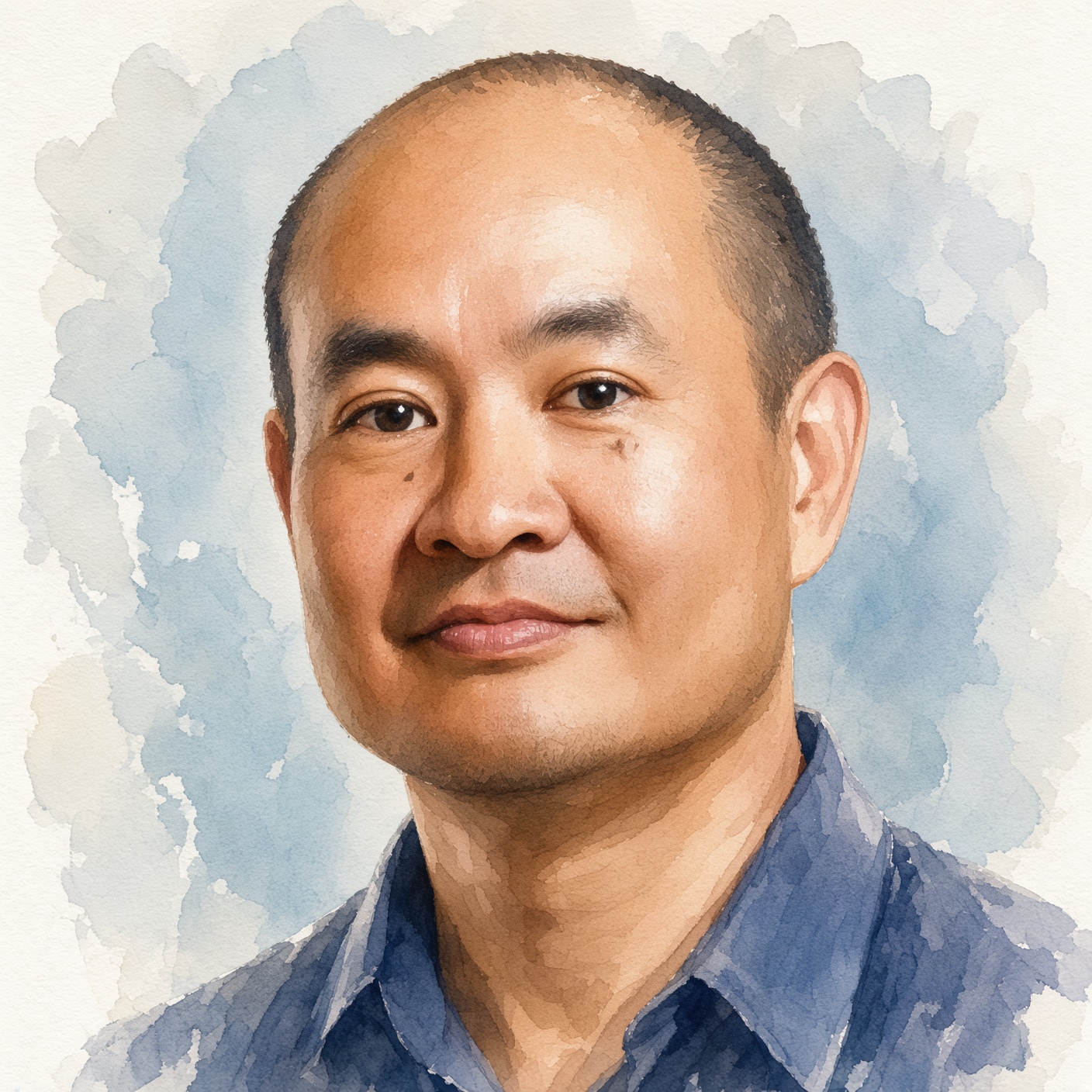
Dennis Yu
CEO · BlitzMetrics
- Identity
Digital marketing pioneer, early Yahoo search/analytics leader, and one of the most-featured guests in Conquer Local history. Known for the 'dollar-a-day' strategy, Facebook/TikTok ad playbooks, and building AI-agent-driven teams.
- Company
- BlitzMetrics
- Location
- NAB Show, Las Vegas
Related episodes
 54:11Strategy · Ep 3Reinvention, Partnerships & Playing the Long Game with Martin ScholzMartin Scholz · Business Leader & Entrepreneur · CEG…Same theme: go-to-market
 65:23Mental Toughness · Ep 10From Managed to Modern: Evolving the MSP Channel with Juan FernandezJuan Fernandez · Co-Founder & CEO · MSP-aaSSame theme: ai
 49:44Identity · Ep 4Trust, Credibility & Why Cold Calling Still Works with Jim ThompsonJim Thompson · Journalist & Founder, BrightTrail…Same theme: sales
 44:10Accountability · Ep 9Mentorship and the Generational Gap with Quang DoQuang Do · Partner · RevEng ConsultingMore from the show