
Reinvention, Partnerships & Playing the Long Game with Martin Scholz
Martin ScholzMay 20, 2026· Remote (Berlin / Saskatchewan)
Berlin advisor Martin Scholz on partnerships as the evolution of go-to-market: why 80% fail, what actually makes them work, and his reinvention from burnout-travel executive to a life that fits.
Chapters
- 0:00Mutual mentorship & what a real partnership looks like
- 3:00From the Berlin Wall at 16 to 20 years in the trenches
- 5:00Cape Town: naming 'the grind' and its cost
- 8:00"I didn't marry jet lag". the family toll of travel
- 11:00Lockdown, the bike trips, and reinvention
- 16:00German rigor vs. cowboy: the 'P word' and SOPs
- 23:00Why partnerships matter: capital-efficient growth
- 26:00The 80% failure rate. partnerships as GTM evolution
- 29:00The Adobe badge: partnerships as credibility
- 37:00The three reasons partnerships fail
- 40:00It's not just SaaS. the plumber & the electrician
- 42:00The life he leads now. and the income dip that wasn't
- 50:00The grind is self-imposed; word-of-mouth as the engine
Highlights
“I got the highest frequent-flyer tier and thought 'yes' — then realized it just means I'm away from my family too often.”
Martin Scholz
“My wife said one sentence: 'I didn't marry jet lag.'”
Martin Scholz
“You know what your superpower is? You're pretty good at reinventing yourself.”
George Leith
“70 to 80% of partnerships in B2B SaaS fail. My vision is to bring that number down to 70.”
Martin Scholz
“Partnerships work when they're understood as an evolution of your existing go-to-market.”
Martin Scholz
“Nobody closes better than partner-sourced leads.”
Martin Scholz
“Sales is transactional. Partnership is 'marry for 25 years' — you have to find the perfect fit.”
Martin Scholz
“It's more critical to understand what's in it for them than what's in it for you.”
Martin Scholz
“We accepted a dip in income for more flexibility and a lifetime.”
Martin Scholz
“LinkedIn becomes Linkstagram — everybody hunting for engagement, nothing meaningful.”
Martin Scholz
Transcript
George Leith: Conversations with the operators, founders, and leaders doing the slow, hard, beautiful work of becoming who you always knew you could be. I'm George Leith. Let's get to work My good friend Martin Scholz joining me all the way from beautiful Berlin on, uh, this edition of the Evolve Pros podcast. Good afternoon, Martin, but it is morning where I am today
Martin Scholz: Good morning, George. Good to be here.
George Leith: You're looking fresh. You're looking fresh, my friend. So Martin and I have known each other for eight, maybe 10 years. Um, and where we met was back when I was earning my travel stripes, and I believe at the same-- You were kind of about the same, uh, where we were really doing a lot of traveling for the tech companies we were involved in at the time. Um, and, uh, you know, it's just one of those things. You meet certain-- I found this. You meet certain people in your life, you stay in touch, you learn a lot from them. Um, and I really appreciate the, the mentorship and, and the, uh, coaching that you've given to me over the years. Um, sometimes, you know, I, I was in trouble and I needed some help. Like, not major-- You know what I mean, though. Like, I've got an issue and I, and I need some Martin help. And other times it was just to, to check in and, and then it was a vice versa kind of, uh, thing. So we've arrived at this great spot where we know each other quite well and, um, you know, some of the things that I'm hoping to get out of this episode is when I'm working with business owners, I find that, uh, they don't really understand the concept of partnerships when it, when we speak about go to market. Um, and it's something that you and I are very passionate about because we both have been involved in very robust partnership models. So we definitely are gonna talk about partnerships today. But, but one of the other things that I wanted to get out of this episode is, um, as you and I've gotten to know each other better, we've talked about some of the evolution that's happened in your personal life. Um, and I'm hoping to get to that a little bit later on in the episode. But first, uh, maybe give us just a bit of your background for the audience if they haven't met you yet, Martin, and, uh, you know, what you're up to today, um, and how people might be able to find some of the amazing content that you've been producing. And then, and then we'll let the, we'll let the episode kind of guide where we go as, uh, as we spend the next half hour or so just having a conversation. So welcome to the new Evolve Pros podcast.
Martin Scholz: Thanks again. I wanted to start off, um, for us to say that I want to stress that this was a, is a very mutual relation. So I was surprised when you s- uh, told me, like, you consider me a mentor because I always considered you my mentor. And I think this is probably nice segue what a good partnership looks like, right? You both, both give and both get, uh, something out of that. Um, but where, where do I start off? So, um, I'm also in the trenches for quite a long time. I started my career back in days when, you know, internet was just starting. I didn't even had an email account in my first role, and you were super excited when you got a personal email and, you know, um, communication happened on fax machines and, and all that stuff, right? So that's kind of where, where, how old I am. Um, and then, you know, I joined diverse, uh, roles in diverse, uh, or dif- different industries and, uh, you know, made my career across different are- industries, different company sizes. Um, so started in banking, then moved into a small real estate developer, then into an, um, energy startup, then found myself in a PR company, landed at a Ger- a hu- huge German European publishing house where I then, you know, tipped my toes into the internet thing. Yeah, you know, digital business models. And then next thing I know was I was in a VC-funded startup here in Germany when it wasn't fancy yet, right? When you guys in the US and North America already had that, but in Europe, that was pretty fresh and new. And then, um, you know, I stayed with that first startup six years and I helped it to grow. Um, this amazing journey. Made tons of mistakes, um, but luckily more successes along the way. Built the first team, went international, or today I would say multinational first. Other European countries, then the US. Started to travel way too much. Um, stayed there until we reached a certain size and I said, "Okay, it's time for me to move on." That was, you know, the company where we met when I joined Uberall. Again, same journey, 50 plus. Traveled even more. I realized what international really means when in, I think it was 2016, '17, when I was on every continent of the world except Southern America. Uh, realizing that is something to brag, but not when you have two small kids at home. So, uh, big thank you to my wife keeping my back all the time. Anyway, so again, 20 years of making mistakes, learning along the way, um, brought me to a point where I said, "Okay, I'm not getting any younger. Uh, maybe I need to find a way to balance work and life better." And working part-time in, in a startup as executive, I'm not saying it's impossible, but I haven't seen anybody try it. Uh, so kind of natural flow was to go on the advisory route. So for me, it was a very conscious decision to say, uh, also in conversation with my wife, right, you know, probably giving up some of the income, um, but having more time and priorities on that one. And there are a couple of other things on my scorecard, but for the last four years now, I'm working as an advisor trying to help amazing B2B sales companies making partnership work and avoid the mistakes I did. I mean, we can find new ones, but don't repeat the ones which you already made.
George Leith: Well, so let's, um, let's start with when we met and, uh, I, I particularly remember a conference in Cape Town, um, and you know, we-- I might have had a couple of beer, um, and you might have had a couple of wine. Um, and that was when we really started talking about the grind. Um, and, and it was probably the first time that I recognized that it was a grind. Um, I've been watching, uh, watching Dana White here recently, uh, famous CEO of the UFC, and he, and he made a comment the other day that I saw that, um... And I, I was gonna not swear in this podcast, but he said, uh, "I can't fucking wait to get to work every day." Um, and, and most days that's the way that I feel. Um, part of that is workahol-workaholic, um, and I, I've come to terms with that. But on, on the flip side, if it's, if it's a massive challenge and we're winning or we feel like we're winning and we can see a win, then the grind isn't, it isn't a grind. But when you and I kind of bonded in that moment and we had that conversation, I think one of my statements to you was I, I couldn't be doing what I was doing with two small kids. Um, and, uh, my daughters would already probably accuse me of not being present in the early years. So, you know, that, that was that first revelation that I had that maybe this is a grind, um, and there better be an outcome that will match the investment that, that I was making. And I, I remember very vividly having that thought that evening in Cape Town. I remember what we were wearing. I remember it very clearly because it was one of those moments that I started thinking about the investment that I was making on a day-to-day basis. And, and my wife, who you've met my wife, she'd be like, "You're off," you know. When I would hit the road, she's like, "You know, you're all excited." Yeah, because you are kind of excited. You're gonna see new places. You're gonna meet new people like Martin. But there is a, there is a toll on the other side of that. Let's talk a little bit about that because that was that moment where I, I believe you and I really started to bond.
Martin Scholz: I couldn't agree more. And I was shake-- uh, I was nodding all the time along because that was literally the learnings I had at, at that stage. So, um, I always, um, said to my wife, you know, I'm not flying around half the globe to i-meet idiots, right? So I always said like, this is fascinating, and it was exciting to be on the road. And now let me rephrase that. I hated it, the hours wasted in, in, in airplanes. And, you know, at some point I realized when I was a long distance flight to Hong Kong, uh, probably to our friends in Australia, um, I was like, what I'm doing in this metal tube here, right? And then there was like this, I'm not sure, there was like in the '70s or like an old school horror movie like Stephen King's Longhairs where the world is eaten around the people in a plane. And I kind of like had that flash and I was like, what the hell is, is there still reality out there? Um, and that was like the, the one thing, and I think one of the early, uh, wake up calls for me was when I got the highest frequent fl-traveler tier back in the days. Yeah. And I was like, yes, I got it. And I was like, wait, what are you celebrating here? This only means that you're away from your family way too often. And, um, that was also kind of the stuff when, you know, I was trying to be a mindful father. I was trying to be, you know, double down when I, when I'm in Berlin, when I was at home, really be present, be around. And I was basically pretending quite a bit. And I remember I came back from a long distance flight on, I don't remember which one, New York. But usually, you know, usually flew out on a f-on a Friday, so arrived Saturday morning. Of course, the weekend already started. And in the evening there was, I think, the 40th birthday of one of our closest friends. So 10 plus, 10 plus years ago at my time at Uber. And I was so tired. I was so jet lagged. And, um, you know, my wife dragged me to the party. Uh, it was a bit bigger one. And then, you know, my friend said like, "Oh, come on, poor Martin just arrived. He needs to be terribly tired." And my wife just said this one sentence like, "I didn't, I didn't marry jet lag." And I was like, okay, you need to pull that through, right? You can't slack now. You need to be present here again. And, um, I guess that was all, um, you know, the things where I realized, yes, it was amazing. It was exciting. We did things nobody did before this. It felt like it. We saw progression. You know, we started publishers. We made it successful. We built relations. We saw it took off, the business took off, um- And it was really, really positive feedback, but it came at a price for sure. And you know what? I, I realized that, I realized that dramatically when we were... came back, uh, into lockdown at Corona. I remember I flew back from Cape Town, um, somewhere March. Um, and when I was sitting down with Greg Aber, you probably remember our, um, my colleague in South Africa, he brought, had me, took me to the airport, had, uh, me, brought me to the airport. We were-- He was waiting with me a bit because we're a bit early. And then on the, on the, on the, uh, South African news, they had the f- the first reports about Corona in South Africa. And I flew back, and I basically flew into lockdown here in Germany. And then I was grounded, and then I realized how much I was traveling and how much I have been missing all these years when I thought I would be present, when I thought I would be around for my kids
George Leith: The, um, you know, those conversations... I remember one conversation where you were, um, I, I usually message you when your afternoon is happening, and I, I think it was a Friday. You had the bikes all loaded up, you're taking the kids, um, and you were gonna go biking. Um, and you know, where our, our friendship had grown to a point where we were now communicating, you know, once a month, once every, you know, quarter at the very least. And, and I remember the difference in your facial expression and your energy level because you were so excited to go on that trip and spend that time with, with the family. And that, that was the beginning then of, of the new life that you live today. And, and, you know, we'll talk a little bit about the, the, uh, consulting business that you're running and, and, and that in a moment. But let, let's just talk about that transformation because the entire show and the purpose of this show is, you know, I've, I've been through a massive evolution. Um, and I, and a mentor of mine one day said, "You know what your superpower is? You're pretty good at reinventing yourself." That, that to me was a, was quite a compliment because part of reinventing yourself is, is you need to learn, and you need to be learning new things. And, um, b- I, I, I saw that the Martin that I knew, who was a very driven, almost robotic individual, um, that was very, very good at what he did, that was what first I got, "I gotta meet this guy." Uh, because you were, you were all the things that I wasn't. I f- s- you know, I was flailing around, and I didn't really have... And I was like, "Whoa, this guy's really dialed in." And I learned that I could learn from people that were like that. Um, and, and then I saw this Martin that was enthusiastic about something that was outside of us hitting a KPI, and I was like, "That's the real Martin." And not that I hadn't met the real Martin before. I'd met a version of Martin, and then you e- you evolved based upon a couple of punches in the face it seems like, whether it came from your wife that night at that party or, you know, there had to have been something with the kids probably that led you to, "I need to be doing these biking trips with, with my, with my kids a little bit more." And I, I don't like using kids sometimes because I think of my grandkids now. I like saying children or adult chil- I don't even know what the proper naming conventions are. But, um, let, let's talk a little bit about that because I, that's the kinda stuff that I'm hoping we can get on the table in this show. I think what a lot of people see is they see success. Uh but what they don't see is what happened underneath to get to those successful magic moments.
Martin Scholz: I'm super ha- super excited to share some, some of my personal journey. Um, so I think, you know, during my career, um, you know, when I kicked off early, you know, coming from high school, having not a clue, clue what's happening and, you know, just, just, just one of the facets of my life is that I grew up in East Germany, right? So behind the Iron Curtain. When I was just 16, the wall came down and a whole new world opened up, but all, also at the same time, a whole-- my whole world crashed, was non-existent anymore. So I had to relearn, rethink, re-plan everything and anything, and my parents couldn't help me because their whole world crashed as well, and they were even more challenged to make their adjustments. So, um, my initial version after, you know, graduating from high school was like, in Germany, we have this, um, industry of, uh, mid-sized company, like the, the backbone of the German industry. Like, some family-run, 200 people manufacturing company somewhere in southern Germany, southwest Germany. You never heard the name, but they're basically world market leader in some car equipment part, whatever. And there was this going, this thing going like, oh, they have success- succession problems. Successions? Mm-hmm. So the, you know, dad built the company. It's always had been dad back in the days. Uh, kids are spoiled, doesn't want to have the hard dream daddy did. Um, so they don't know who takes over the company. I was like, "Hey, you know, my dad couldn't build a company. Here I am," right? That was kind of me. Uh, because this company usually were r- run by two managing directors. We don't have C-levels in Germany, but, you know, traditionally two managing directors. One was the product guy, the engineer, and the other guy was typically the man- the economic part. You know, anything which is sales, marketing, finance, probably HR even. So very generalistic. I was like, "That's me," you know? So that was my North Star. So I started to do, uh, business development when that was still the idea of developing businesses within a company and not doing the, you know, the tough job of outbound calling. Um- So that was kind of, and, and, uh, as I said before, I touched different, um, industries and such. I learned something along the way. Number one, I am good in small but not too small companies. I've worked in corporates, you know, bank, publishing house, huge companies. Ah, too much politics, too much str- uh, too much processes, hard. Like, you know, mm, you, you can't get shit done there, right? You have so many rules, especially in Germany, probably even more. But even, you know, Ame- American corporates, if you have 1,000 people, you need to have clear processes and, and, uh, approval lines and everything. Um-
George Leith: You know, can we... Be- before we go there, I, I noticed something. I don't know if you noticed this, but I, uh... That just happened. Oh, really? I, I, I didn't pick the mug, and I remember when we were there, we got that mug. Um, but I- That's
Martin Scholz: nice...
George Leith: when I see that level of standard operating procedure and that level of process and measurement of... I, I... Like, I admire that Whereas, you know, I come from the cowboy, uh, you know, I'm a Canadian, but, you know, the cowboy, my- I'm two generations away from my great-grandfather, you know, getting, walking. You know, I can't even imagine what they did. Walking, breaking a quarter section of land that had never been farmed before. You know what I mean? Like, that, that's, we, we just figured it out. And, and I think that that's been part of my entrepreneurial journey is one of the, one of the items, and you'll see it in the upcoming book. We got a meme there, and, uh, when we were doing the pre-read, my wife was reading the other day, and she's like, "This meme doesn't make sense," because the meme is the dog with the fire around it in the office. Yeah. And the dog is like, "This is fine." You should see what Grok built me for the book. It's amazing. Um, but I, I'm, I'm like that. Unless there's fires going on all around me, I'm not, I'm not accomplishing anything. So that was one of the things that I always admired about German, um, rigor, was that I felt that where we were at building a software company, that if we didn't build more of that rigor, and I, I, there's a blog out there that I've written that we probably should have started RevOps about five years earlier, but it wasn't even a thing back then, much less chief revenue officer was designed in the time that I was leading sales. So, you know, where- whereas you're, you bring it up, you're like, "You know, Germans are..." But I'm over here going, "I think there's a lot of people that could use a little more of that rigor and measurement." But do, do you- I think-... tendency to feel like it goes too far sometimes maybe?

Martin Scholz: Okay, so I'm trying to be not too, um, uh, generic here, but I think in Germany, 100%. Look at the German Data Privacy Act. That's ridiculous. And don't get me wrong, I'm very, very happy that we have that, that not, no, I don't have, like you probably, 20 calls from random numbers this, uh, every morning from some outbound callers. That's illegal, s- strictly illegal in, in, in Europe, in Germany. But they go way too far, right? It makes things super complicated. Um, personally, I would say for a German, I'm probably very cowboyish, um, if, if you don't mind me using that term. So I learned when I'm in, in big corporates, and, and honestly, you know, if you look at any American corporate with 1,000 people or more, they have rigid procedures. You know, I've worked, one of my re- uh, more recent clients was Semrush, and they have grown just about 1,000 people. The processes I was, uh, sawing, seeing there was like, "Okay, that's very German." Um, so you know, you need it. You can't operate 1,000 people without pretty strong, you know, guidelines and, and, and, and r- uh, guide rails, uh, guardrails and, and, you know, how do you get things done? I realized if it's company was too small, I was a bit nervous. I, I-- and I was too senior to join a small company. I would have founded, needed to found it myself. So my sweet spot was 50 to 300, 400 people. 50 because then it was too big that a founder could run it themselves. So I always came in like, "Hi, I take something completely off your table. You don't have to worry anymore." That's my seniority level. And I-- that's my promise to you. You don't have to worry, I give you the results. Um, and then I started, um, to establish standard operating processes or processes. And if you don't mind me telling this little anecdote. When I joined Uber, you know Bernard, right? Bernard Fillis.
George Leith: Mm-hmm.
Martin Scholz: He was already there. He was, like, the most senior guy in the team before I joined, kind of. And, um, the, the founder told me, "Martin, whatever you do, don't piss Bernie off." Right? I-- oh, sorry. Shouldn't use those terms. No,
George Leith: it's okay. And I was like- I've
Martin Scholz: gonna
George Leith: say way worse words, so you're good.
Martin Scholz: Okay. So I was fine. Uh, I was like, "Okay, fine." So, um, I talked to him, and at one point I said to him like, "Mar-- uh, Bernie, maybe we need a process for this." And he looked at me like I said something very dangerous, like the P word, right? Like, so, process. That's so corporate. We are startup. We are blah. I said like, "Okay, sorry. Communication issue. If I say process, I don't mean, like, a struct- a strict, like, ISO norm kind of step-by-step thing. It's more like for me a process written down best practice, that we don't reinvent the wheel three times." Like, my wife is a process designer. She makes these massive charts with, you know, what if then. I'm not talking about that. I'm saying about, like, let's make sure that we know how to do that. And then we kind of solved this little irritation. And then six weeks, two months in, he comes to me, he came to me, I'll never forget that. He said like, "Martin, it's the third, uh, we have this situation. It's the third time that it comes up. Should we make a process for this?" And I looked at him, "Did you just say the P word?" So that's kind of the, the, the balance we need to find, right? Rigid enough to not reinvent the wheel every time and, you know, make mistakes again, which we already made. Or, um, without being so strict, like typical German bureaucracy, where, where you can't even move anymore, and you, you don't have the space for breathing, right? So that's-- and this is, like, what I think one of my p- super powers probably is to, to be that pragmatic person and to adapt the level of process to the, to the maturity of the company and the size of the company. And then there's this point where it b- really becomes SOP, standard operating processes documented with a Confluence or whatever knowledge base, then, then I'm out. That's kind of an- You do that, or my wife probably would do that.
George Leith: Well, and, and so, you know, here's my statement on that. Um, it, it's bloat. It, it, it becomes operational bloat. So as much as in the early days it's important because it'll help you from burning money, and, uh, you know, I remember y- when you and I met, and you, you know, you even came to our hometown, you saw the facility that we were building at, at Vendasta back in the day, um, I, I never once felt that we weren't being fiscally responsible. But now that I look back at it, and literally yesterday I was there and I was having a conversation with a few of my former colleagues, and still do a lot of business back and forth with that organization, and, uh, you know, I'm still a shareholder and, you know, Brendan and I are still good friends and, um, you know, I, I now can see it. Like the conversation was, "Would you ever hire 100 sales reps at one time again?" I'm like, "Yeah, no, I'd never do that again." Um, but you know, the pressure was coming from the investors that if you hire another 100 reps and we get the same production we get out of the machine that we built, we should get this growth. That, that was the thinking at the time. Money was free pretty much. All of that has changed. All, all of, all of those items have changed now. Um, and when we started to put some standard operating procedures in place, we started burning less. We started being more successful. We started saying no to things that didn't match. Like, you know, most overused acronym right now, ICP, in the space that you and I are in, right? It's, uh, I think half the people don't even know what the hell it means. But I think it's been an important evolution that has happened to business where it's like, um, show me the last five people. I had a guy yesterday, he's a solopreneur, and you know that I have an affinity for solopreneurs. Probably not the best investment of 45 minutes of my time, but I love learning from those calls and I love teaching on those calls. And he was like, "Well, I need a lower priced option." And I'm like, "Why?" And he's like, "Well, what if they won't spend $1,500 a month?" I'm like, "Then they're probably not for you." And, and yet he's solopreneur building a business, so starving humans, it's a scientifically proven fact, will eat anything, right? They'll eat crazy shit because they're starving, and that's sometimes... So, you know, I, I, I went on a bit of a, a weave there. I want to weave it back. I think that it's always a balance, and I think it depends on where you're at in your journey as a company. I think in those early days you've got to be scrappy and you've got to be flailing around a little bit. But if you put some SOPs in place, some standard operating procedures, have some focus on your ideal customer profile, um, you probably have a lot more success and burn a lot less of the, that very precious capital that we have to get companies up and running, whether you're bootstrapped, venture capital, whatever it might be. So now let's, let's kind of take that weave that I did there, um, and move into this thing of partnerships. So when I sit down with a business, and I had this happen the other day, I was talking to a business owner and, you know, they're very successful, $8, $9 million in revenue, and I found out that it's actually 60% of their business is flowing through partnerships. But people don't talk about it. They don't, they're not proud of it. They might not even know that it's a thing. Whereas you and I are over here, we've tried to install partnership models into organizations and, and it's a perfect fit for them, and you do it all the time now. Let's talk about this decision. So do you sell direct? Salespeople carrying a bag around, dialing the phone, doing what you and I are doing, Zoom call, crazy shit, right? Or is there another way to get to the end user, which is through partnership model, or is it a hybrid? Let's talk about that
Martin Scholz: Sure. For me, I guess, um, it's very interesting. Um, partnerships, you know, there's this one statistic I f- see and hear again and again, and I'm using it shamelessly, which claims that 70 to 80% out of partnerships in B2B SaaS startups fail. 80%. That's one, two, three, four, five. The first four you're, you're out. You need to visualize that. Five people in a room, four lose their job, right? That... Isn't that crazy? That's crazy. And it's accepted. And I was like, I, I put it on my LinkedIn, like my vision is to bring that number down to 70, which is still crazy, but at least-... you know, need to start somewhere, right? So what are the things here? A, a lot of things. So many things. Like, sorry, and you need to cut me short, uh, probably at one point. Number one, why is partnerships so important? One thing I learned only, you know, during... When I started my, my, uh, solopreneurship and, and Wisepeople I was like, "Okay, I'm running around, um, screaming, 'You need partnerships.'" This is like running around screaming you need a CRM or a hammer. You're, you're screaming the tool, but you do not, uh, scream the purpose. Why? Why do I need it?
George Leith: Right.
Martin Scholz: And there's one thing about partnerships I, I realized, and that's, you know, also why my company's called CEG. What do partnerships... Every ki- every type of partnership, regardless which type of partnership, they usu- they always increase the efficiency. So talking about not burning money because money is not, uh, for free anymore because cus- investors need to see how you invest it efficiently. It's capital efficient growth, CEG. Capital efficient growth. You need to show that any money you... they give you, turn into one, one, $1.20, $1.50, whatever, $2, $10. So how do you make that work? And, um, partnerships will help that. The thing what I see is that the pressure's on, right? You, you know, outbound is getting more expensive. Everybody's doing now per- hyper-personalized spam. Uh, AI doing outbound calls. People lose trust. People won't pick up the phone anymore if that's not mom calling, right? Um, iPhone has like, "Who are you? Why do you are calling?" Like, "Give me a reason that I even put you through." Um, inbound, you know, who's still reading white papers? Everybody creates like content like this or have AI create content. When was the last time you read a white paper or even a one-pager now, right? So the cost, customer acquisition costs are exploding. And everyone's like, "Okay, how do I get that in check?" And then there's this fancy new toy, which is called AI. You know, people running sometimes blindly to the snake oil dealers on LinkedIn who claim that they built overnight something with clay and whatnot, and here's a comment XYZ to create this self-running machine which generates you two million ARR in two minutes. And you know what it is? It's snake oil. It doesn't work. It doesn't work at scale. Um, so after they burnt their fingers on AI, and, and don't get me wrong, there are amazing use cases on AI, on research, on signal and whatnot, but it's not the magic silver bullet. They turn to s- to partnerships, which is in freaking established motion for 100 years or more. But it was always a stepchild because it didn't, it wasn't as easily forecastable like the m- the machine we run in since the 2000s or the 1990s of predictive revenue, what it was then. I don't know when it came out, but, you know, partnerships are not that predictable be- uh, because it's not my business. It's my partner's business which helps to my business, right? Um, so bringing it back. W- Partnerships, I would usually never recommend one or the other. For me, it's also not, or. For me, partnerships are successful if and when they are understood to be an evolution of your existing go-to-market. Partnerships are working best if they help the established go-to-market teams to achieve their goals. Make partnerships help product to achieve their goals, building a better product. If you, you know... I don't have to tell you, you know, Vendasta picked Uberall to provide the first instance of a product so you don't have to build it yourself. Right. Because we were the experts. So that was a win-win situation. You could focus on the great vision you had, and you didn't have to fiddle around with a single point solution. We were the experts in it. Um, we create together a better product. Um, it can help, of course, the marketing. You know, the first partnership I built, the big one in Searchmetrics, my first company, was we paid a shitload of money to become an Adobe solution partner. Uh, we even flew from Germany to Utah to get this thing developed because we needed an API, and the doc- uh, API was a new thing back in the days. It wasn't documented. This didn't give us a single lead. What we needed was the freaking badge that we are a solution partner, because we tried as a German company go to the US, we had two US competitors. We always had to had a trust issue, brand issue. Being Adobe solution partner and getting an award because we are the freaking Germans flying over the ocean impressed the Americans so much that they even gave us the best partner award, best technology partner award, best technology EMEA, but we dropped the EMEA award. Um, that gave us credibility. That is brand building. That's the margin. Right. It's a marketing function. We, we delivered with, with a strong partnership. Um, of course, sales benefits. Nobody closes b- uh, no, no deal is closing better than partner source leads Yeah, partner sources are always the best leads, like highest conversion rate, fa- shortest sales cycle, usually higher than average sales cycle, uh, uh, contract value. So of course, sales benefits. Sales also benefits from the better product which we built in the first place.
George Leith: Right.
Martin Scholz: Because it increased the value proposition. And then there's a huge thing people al- always overlook, customer success can benefit massively from partnerships because the other thing which is happening that, uh, companies are re-evaluating their SaaS spend. Everybody has financial pressure, so CFOs are asking like, "Why do we spend this much money on that? What does this product do for us? What is this SaaS subscription?" So a lot of SaaS companies face a lot of churn, um, or maybe not churn, but at least like, um, uh, retraction on, on, on the- Contract, yeah. Contraction of their revenue. Yeah. Contraction, sorry, yeah. Um, if you have strong partners making sure the adoption in your, in, in your client is high, um, that they're really u- using the maximum of your product, that's super powerful, and that goes way beyond what CS can do. Sorry, I don't wanna dive too deep. So, and I, I
George Leith: lead you into it. Well, and I think you, there's one, there's one other, and that is at the end of the day, partnerships are a structured referral mechanism. And, and that's why they're so powerful is because referrals are our best form of leads. And back to your point of outbound calling, inbound is me- muddy. Like, all the stuff that you and I knew for 10 years is different now. Um, and, and I, I think that businesses that are not considering partnership plays are massively missing out. Um, but to your point, with an eight out of 10 failure rate, what, what are, what are some things that you're doing at... You know, you and I are both members of Pavilion Global Group of SaaS revenue leaders, partnership leaders, marketing leaders, now CEOs involved in that group. I've learned so much from that. That's... I, I credit Pavilion with where my career is at. What, what are you prescribing when you host one of these meetups that you're doing with, you know, German and, and Eastern European countries? I believe Europe, all through Europe. But how are you solving this problem? What, what are... If we're getting to some solutions now.
Martin Scholz: Yeah, to the solution one, I think, um, there are a big challenge for partnerships is that it's usually, um, initiated by CEOs and CROs who have a strong sales background but never thought about partnerships. So that's simply a lack of knowledge, which is not their fault because if you go to amazon.com and you, uh, check out for books for B2B's, uh, B2B sales, you get 500, 700 books. If you type in B2B partnerships, you got not even 20.
George Leith: Wow.
Martin Scholz: 10 of them, you know, imagine that Do that. Do me the favor, try Later out. It's not, it's not made up. Um, and from these 20 books, 10 are amazing books about the good old days when we had distributors and we had software, you know, put on floppy disk and CD-ROMs, put into card boxes and shipped around the globe, which is basically like selling bananas because it's wholesale business. SaaS is a very complete mechanic, you know? We, we need-- we don't sell software, we sell subscriptions to use our software as long as the customer sees value in it. So we n- are constantly considered to drive value to actually get the CLTV out of the client. When you bought a Microsoft 95, you-- the Microsoft got the CLTV, customer lifetime value, the moment you bought the box Because whether you installed it and used it on your machine wasn't their problem. You spent the $99 or whatever it was back in the days to, to get the software.
George Leith: I had one question for you because you and I will always defer to software because it's where we've been living for the last 15 years. But I, I was thinking about something the other day. Private equity firm is out buying up mom-and-pop plumbers and HVAC companies, right? So they come in with a mindset of SaaS, lifetime value, customer acquisition, um, EBITDA. They're only here for four or five years. They're buying these businesses and they're rolling them up. Could a partnership model be as simple as that mom-and-pop plumber have an electrician that they get together on jobs with, and the electrician- Absolutely starts to say, "Bring my plumber HVAC in," and vice versa? Like, uh, you and I always go to SaaS, but for the audience that, that we're building for this show, I, I think that, you know, flooring store, w- who's your partner? Same. Home builder maybe. Same. Right? Like, can we talk a little bit about that? Same thing. How it applies to other jurisdictions and other genres of businesses?
Martin Scholz: Look, this is, this is a very good point, right? We always feel like we guys in SaaS invented everything. Customer lifetime value was a term before we, there was SaaS. You know, if I go to, you know, true story, we just remodeled our bathroom. My wife called up the company which did a couple of jobs on our other, uh, property and so on, and the guy was literally picking up saying, "Oh, usually we don't do this anymore because we're focusing on this modern kind of, uh, heating, uh, renewable energy stuff. But, you know, for good customers, we, we will do this." And Mar was like, "Well, you know, we built a relation with them." So they had a long term, a long-time customer lifetime value from us, not recurring every month or every year, but whenever we have something, we call this particular person, Mr. Kesselring, and ask, "Can you fix this?" Because we know he's doing a good job. He's delivering value for us. So to your other question, I mean, partnerships have not been invented in SaaS either. There is... Fun fact, there is an ISO norm, very European, ISO 44 from a British guy, that's why 44001, collaborative business relation. That wasn't written for SaaS. That was written from pharmaceutical industries, from chemical industries, from production industries, which always had partnerships for development, for dev- um, for producing stuff, for distribution, et cetera. So it's not a... Partnership is not a SaaS thing. So the model you said, like if the electrician and the plumber would team up, that's basically like you as a software company would look what is the other software my same client
George Leith: is using. That's how you and I met. Yeah, that's why. I wasn't gonna build that solution. You guys already had it. Our worlds came together. That, like that's part... Like, I think people overthink partnership, and that's maybe part of the reason why the failure rate's so high. And then, and then number two, that they're just not looking at fundamentals of business.
Martin Scholz: Okay. May, may, maybe there's a number two. Where, where I was kind of shaking my head was the, the, the three reason why partnerships fail, my opinion. Number one, people do not understand that the underlying business relation is very different from what they know from sales. Sales is transactional. It's like you go in a bar, you make a, a pickup line. You either have a date or you don't have a date. Whether you have a date, you need to go back and next date because it's transactional. You exchange money against service, um, in, in, in any sale, right? I give you money, you give me a product or service. Partnership is this married for 25 years. You need to find the perfect fit. So partnership is not transaction. It's finding the mutual beneficial relation. What I said right in the beginning, you know, you felt like I could be a mentor for you. I felt like you'd be my mentor. We both had this win-win situation on that one, and it was long-term. It was not like getting quick, you know, not getting it that you pick my, pick my bill on the bar, right? I wanted to meet you again and again, and I wanna make sure that we bo- both, for both, um, see the value in there. So transactional relation versus mutual beneficial relation. If you wanna have a mutual beneficial relation, the second biggest mistake that people do is they think about who they want to partner with. You know, when I was you- uh, young and, um, didn't have my, uh, haven't met, hadn't met my wife we've already, yet, sorry, didn't have met my wife yet, I wanted to date Angela Jolie Like
George Leith: Tomb Raider Angelina Jolie or-
Martin Scholz: No, look, I was looking at Angelina Jolie. I was like, "This is a beautiful woman." She couldn't care less. You know, she doesn't even know that I'm existing on this planet, right? But this is what startups or, or companies often do. I want to partner with that big gun. Like, I wanna partner with Salesforce, I wanna partner with Adobe, I wanna partner with AWS, I wanna partner with Accenture, Deloitte, whatever the big gun in the game is. They have all the customers we want. Yes, they do have the customers you want, but what's in it for them? In a partnership, it's way more critical to understand what's in for them than what's in for you. And so mutual beneficial, thinking about why would somebody else care? What is your partner value proposition? That's a crucial thing. And the third one is not like just say, "Okay, I wanna have revenue," but really understand what are the leading things which lead to revenue.
George Leith: So In, uh, in this evolution that you've been on since you and I have met, about eight years-ish, 10 years-ish. Had to really figure that out at some point, but I think it's between eight and 10 years. Um, it, it's, it's interesting when you tell the story at 16 and your entire world changed. I, I can't even imagine what that was like. You and I bonded over a duck in East Berlin. You took me to a pub, got to experience it. Very, um, advan- Like I felt when I was in Berlin that I was in the future. Um, and, and it's just, I, I could probably feel that way in parts of New York, I could probably feel that way in Chicag- like, but it, it felt a little bit advanced to me. Um, and then you took me to this pub where I felt like I was 20 years back and I, and I was living in, and that's one of the things that I love about travel, is being able to experience those other items. But then as I, I, I think about that evolution, you've got those moments where your wife is like, "I don't wanna go out tonight with the jet lag. Like, get your, get your shit together." I get those too. I had one of those last night where she'd been talking to me, I was vibe coding, wasn't paying attention. Now I'm older, I just go, "Sorry, I wasn't paying attention. Now you have my..." And I look her in the eye, and I still don't think it smooths it over, but I'm trying to do a better job of that. Um, but let's talk about today. We got a few minutes left here in our... Let's talk about the life you lead today, and I'm not, I know your evolution isn't done because you are a constant lifelong learner and you're continuing to evolve. But you're, you're living a way different life today than you were living when you and I met. And what does that feel like? What does it feel like for you? What does it feel like for your first team? I think you mentioned w- you mentioned that in business. I think we got a first team in our lives. And then what, what does it mean to you waking up going to work every day?
Martin Scholz: Um, so I think the best thing which sums it up pretty well is that my wife is super happy with the decision w- I took, we took. Um, she literally, you know, and pe- you know, my friends asking me, you know, most Germans are very risk-averse, so most people are in their corporate jobs with big pension by now, you know? It's like, "Okay, how's it going?" And whatnot. And you know, I s- I tell them about the rollercoaster every solopreneur has to do, about the good days and the bad days, and how quickly that can change or, you know. I'd ex- recently chatted with a, with a peer of mine, he's from Amsterdam, and I said like, "Oh, today is one of these days." I was so enthusiastic to start, and then I got a slap in the face because something I thought would be a prospect turned out to be definitely love to work with you, but not now. And I was like, "Oh, geez, I could get a new project," or, "Would, wouldn't mind to get a new project." And then there was something positive and it's like, you know, a rollercoaster. It's like, uh, ups and downs, you know? Uh, best job I ever did, worst thing I ever did several times a day, kind of that was his response, right? Yeah. So my wife said like, "Martin, you're so much more relaxed. You're present. You... I can't, um, you know, we, wh- while I helped, uh, at home, you know, prepared kid, uh, pre- prepared breakfast all the time when I was at home, there were so many years I wasn't at home. Uh, but now I'm o- not always at home because I'm still traveling, but way less." Um, she said like, "You know, I come home, laundry's done, grocery shopping is done." Not every time, not e- always, but regularly. And it's so much, takes so much pressure off her shoulders. She's, you know, she has her job as well. Right. Yeah. Um, she worked part-time. She, she gradually increased the hours. Um, but overall the chance is to say, "Look, I get this covered. I got this covered. I can make that work." I'm not in Australia, so as amazing it is, and I was, as much I would love to be in Melbourne again, I don't know, if I'm here, I can pick up this or I can, you know, be around if the, if the craftsmen come or Mr. Kesselring wants to do the, the remodeling of our bathroom. I can be there. That's not a problem. It's not always her. Um- And the very clear decision was, um, with, with my wife is we accept to get a dip in income for having more flexibility and a lifetime. And you, you mentioned about the punches in the face. There were some pretty solid ones which really, you know, part brought me to a point where there's a difference between knowing something, you, you read about it, to understanding it, to really incorporate it. And, and I'm missing the best English word, but really make it your own.
George Leith: Mm-hmm.
Martin Scholz: You know, I read this 20 years that nobody on their dying bed ever complained that they worked too little. I read that when I was 20. I found it, oh, that's a good, good reminder. But I kept working like an idiot, right? We, we grinned it. We both grinned it. And then, you know, you came to a point where you do understand it more because you're grinning for 10 years, and you realize that you're missing out, but still you do not take action on it. You just keep going because there's the next big thing you wanna do, the next achievement, the next KPI you wanna, uh, you wanna, you know, get to or even again, you know, overperform Until I really realized you need to take action on it. You need to make this change, 'cause you're not gonna getting any younger. Um,
George Leith: what is- Question
Martin Scholz: for
George Leith: you. Yeah. You, you mentioned the risk. Um, and the risk was your income was going to go down and your lifestyle might have changed. What actually happened? Like, did... Are you guys, you guys missing out on lots of stuff? Or y- you know, I'm, what I'm trying to get to is what I believe the truth is, is that that risk isn't as big as we think it might be. But I'd love to hear your experience.
Martin Scholz: Mm. It's a very fair question, and I wanna be as honest as possible because there's so much BS flying around on LinkedIn. Whenever you look at LinkedIn, everybody who's a solopreneur or fractional or whatever they call themselves seem to be outperforming, and they're always like looking at Instagram and think everybody's on vacation. You only see the good side. Yeah. You never see the downside. Yeah. And I'm, I'm very explicit about being very honest about the journey. I have to say the first six months was super hard. Stupid Martin had to realize that I have a sense cycle. It's crazy, right? We teach people about it and forget, oh, it's applies to myself as well. So the first six months were pretty hard. I was on a, the stage where I said, if nothing cha- So I started in, in, in May. Said if, uh, in October there was a conference here in Berlin. I said, "If, if that conference doesn't change a thing, I need to probably go back and look for a corporate job." And then things started to happen. And then I got, like, two nice clients, three clients. I was like, "That's gonna rock." And, you know, we, uh, finished the f- quarter very strong, and it was, um, forecasted to continue in January, and then both clients dropped. And I was back up to square, zero in January. So it was a grind. It wasn't easy. But ultimately, you know, the first year was okay. The second year was good. Um, the third year, um, was back where I wanted to be. Last year was amazing, like fucking hell. And now since a lot of the years, it's like a bit of like, oh, come on, what's, what's wrong? Like, the pipeline was there, but m- a lot of things didn't materialize, didn't materialize yet, are postponed. Everybody's tight on budget. So but to your main question, are we missing out on anything? No. There was that moment where we said... My wife's like, "Can, should we..." You know, when it, when it wasn't running so well, she was like, "Should we turn back a bit?" We spend our money on travel. We still travel, like, you know, with the family, like February skiing in Austria, which is shitload of money by now. Um, then, you know, Easter we go to Mallorca, another week of shitload of money gone. Then the summer vacation was the big one, which shitload of money gone. Oh, it's October. Oh, weather gets shitty, let's fly somewhere where it's warm. Bam! You know, we... And this is not even counting in the weekends we do in between, you know, the, the fam- the weekend f- uh, breakaways. So that's where we spend the most of the money. And I was like, "Should we probably turn on a bit?" And I was like, "No, actually not. We are still, we are good." But to be honest, we, we are settled, right? We have some built up some reserves. We have our own apartment. We have in our own property, so we don't pay a landlord. Um, our kids are 16, 18 now, so you know, that's again, my wife is earning her money. So the, the basic fallback was if I wouldn't earn a penny, we would still survive very well or, or solidly enough with the income of my wife. We just couldn't do five big travels a year.
George Leith: Question on that. The grind that you have to find a new contract, I guess I'll call it, or, or session with a customer, it, it's not different than the grind you had in the tech company building the organization or building those partnerships. Like it, it's the same thing is what I'm finding. I, I... It's, it's the same. I'm not saying that the experience is the same, the people are different, the business. But the, the feeling that you put, we're putting it on ourselves. It's not the environment that's placing it on us. It-- I, I really believe that. I'm like, it isn't the job that makes it, you're just built that way. Is that your feeling too? Yeah, I
Martin Scholz: mean... Yeah, absolutely. I mean, this is the, the thing is, um- I always tend to look at myself first and not on somebody else, you know? It's, it's me. And the question is like, did I do enough? Do I, did I do the right things? Uh, was I efficient? Was I effective? You know, um, or was I just like You know, there are these days and, and there's, um, there are these days where I literally procrastinate at home. And I have this wonderful little office here, as, as, as rubbish as it is, but it's, it's, it's outside where I live. So I literally go like 15 minutes to that office, and I know I'm focused here. If I'm trying to work from home, you know, where we're in the desk in my son's room, there's a PlayStation next to it. And then it's like, "Oh, I, I don't wanna, I don't wanna write that next LinkedIn post," which is probably not read by anybody because the LinkedIn becomes Linkstagram, and you see like TikTok videos being re-shared there, everybody hunting for engagement, nothing meaning- It's so hard to get meaningful content from this business network, right? I see all the things which work are the things like, which work on Instagram. It's like, is this no Instagram for me or what? And you, you know, you write, well, I, I invest in writing some meaningful, trying to share knowledge, thought leadership, whatever you call it. And people don't see it because they see motivational videos of some cat babies or some, uh, great achievement from some human being overcoming some struggles in, in life, like, you know, sport, which is amazing, and don't get me wrong, it's heartwarming, but what is this? And like this... You know this, right? Last night I needed to, uh, I, I, um, exchange, uh, changed the diapers of my newborn baby. This is what it learned, taught me about B2B sales. Sometimes it stinks, but you have to pull through. You know, you know this kind of content, right? Yeah,
George Leith: yeah.
Martin Scholz: Like, people randomly match something to what's my business lesson here? Um, or I didn't know, or, or I tho- I thought long and hard whether or not I should share this here. Or I mean, there's PDFs you can download, 42 hocks which, hooks which work on LinkedIn. I wish somebody would have told me this 20 years ago. These three things I wish I would have learned when I started my career in sales. I mean, these are hooks and they work, and don't get me wrong, I'm not blaming anybody that they work, but it's so tiring Right? So, but this is the grind, right? To get through it. But honestly, my, my business, I don't need 100 of leads. I don't need this scaled outreach by Clay and Agentic AI and whatnot. What I want is, and, uh, what I built my business on is word of mouth marketing, network, ecosystem, people who recommend me because they know me, they've worked with me, they saw the results, they give a personal r- introduction. And that, to build this from the career I had, transferring that into not Martin as somebody who's a partnership guy in a company, um, but is an advisor, that's another level. Um, that took a bit of time. But, you know, where I am now, where I haven't been four years ago, is that I see people inbounding to me, which is not an inbound because I wrote a necess- a nice LinkedIn post. Yes, that does help. But it's mainly because they got my name from somebody who told them, "If you have this challenge, talk to this guy.
George Leith: And we will make sure that we share all of Martin's, uh, contact information here on the show. And, um, as always, I knew that, uh, there would be a lot of learnings, uh, in the last 45 minutes. I appreciate you, uh, giving us the real story, uh, because we always have the bus- Like, what you were just referring to on LinkedIn, that's the glossed over business story. Um, Instagram, where it's like everybody's on vacation. It's the very best version of me. What filter can I put? And there's 62... What we're trying to get to on this show is raw, authentic, and really help other individuals when they might be struggling with the growth of their organization. So I appreciate you sharing those lessons. It's great seeing that energy, um, because we, you know, both, I believe both of us have been through a very similar journey where we're doing something, it was great, a- and I would never change it, right? Those years, I would never change them for anything. Now we're doing something that is maybe a little bit more thoughtful, um, and a little bit more focused on what's in it for me, and that's okay to be a little bit more selfish. Um, I think that great salespeople give a lot, and maybe what they should be doing is give a little bit more to themselves. If you'd like to learn more about partnerships and CEG, you can connect with my friend Martin. Um, if you are installing a partnership program in your SaaS company or in any company, this is one of the people that you need to learn from. So that's why I'm so excited to bring Martin onto the show today. Not to mention the journey that I've watched you go through and that, uh, that we've shared over the last, I believe it's eight to 10 years. So thanks for joining us on, uh, the Evolve Pros podcast, Martin.
Martin Scholz: It was my big pleasure. Thanks for having me.
George Leith: My name's George Leith. I'll see you when I see you. That's the conversation for this week. If it moves something, share it with someone who needs it. I'm George Leith. I'll see you when I see you.
About the guest
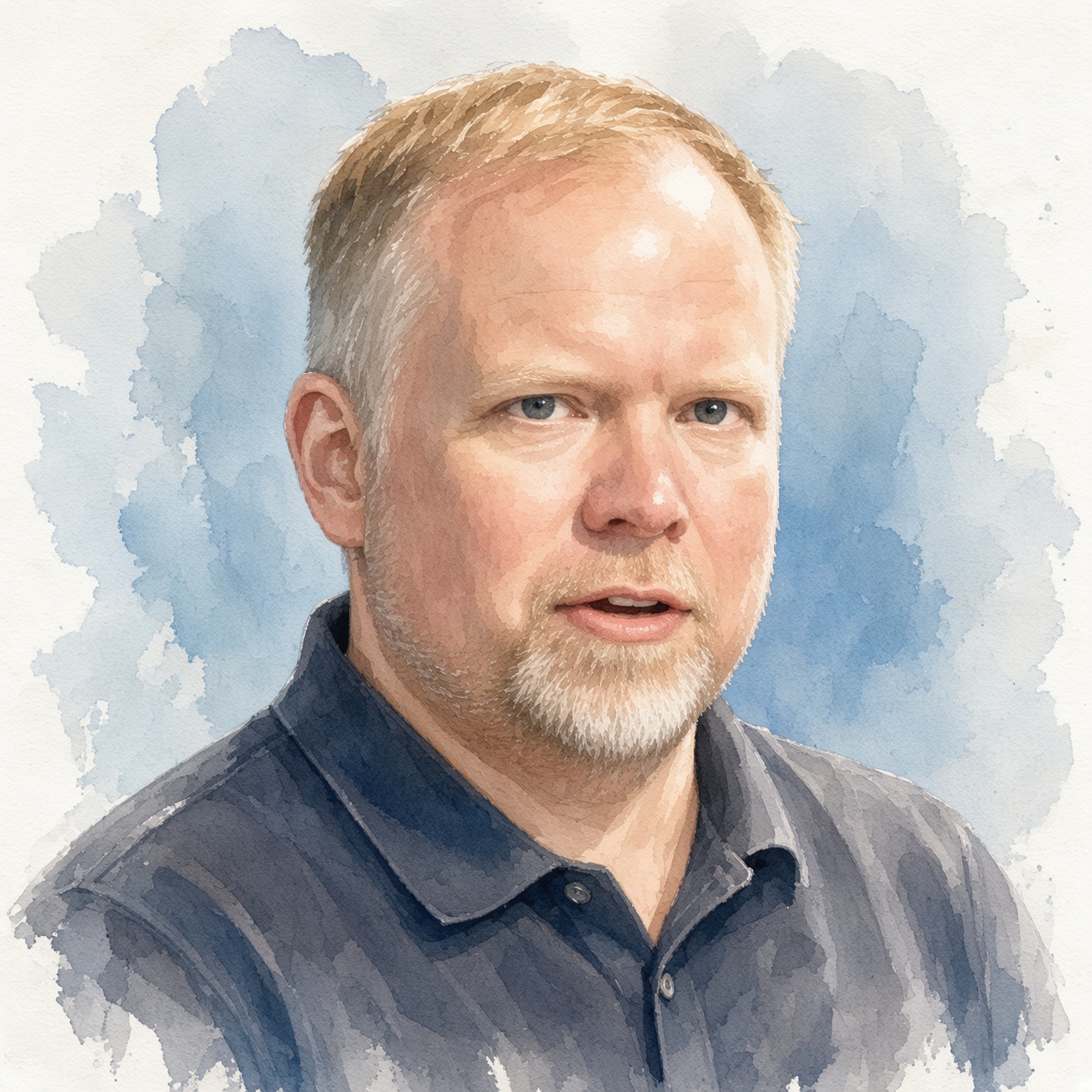
Martin Scholz
Business Leader & Entrepreneur · CEG…
- Strategy
B2B SaaS partnerships advisor based in Berlin; founder of CEG (capital-efficient growth). Former exec at Searchmetrics and Uberall who traded the executive travel grind for an advisory practice helping companies make partnerships work.
- Company
- CEG Consult
- Location
- Remote (Berlin / Saskatchewan)
Related episodes
 54:56Identity · Ep 1Technology & Personal Evolution with Dennis YuDennis Yu · CEO · BlitzMetricsSame theme: go-to-market
 65:23Mental Toughness · Ep 10From Managed to Modern: Evolving the MSP Channel with Juan FernandezJuan Fernandez · Co-Founder & CEO · MSP-aaSSame theme: channel
 49:44Identity · Ep 4Trust, Credibility & Why Cold Calling Still Works with Jim ThompsonJim Thompson · Journalist & Founder, BrightTrail…Same theme: sales
 44:10Accountability · Ep 9Mentorship and the Generational Gap with Quang DoQuang Do · Partner · RevEng ConsultingMore from the show